
If you’re looking for a fast way to get noticed in your city, a mobile billboard can be one of the most powerful tools in your local marketing toolkit. Unlike static signs or digital ads people scroll past in seconds, a branded vehicle or rolling billboard drives directly through the neighborhoods where your customers live, work, and shop—putting your message right in their path.
Below, you’ll learn practical, battle‑tested strategies to turn mobile billboards into a predictable source of local awareness, leads, and sales—without wasting budget on “just driving around.”
Why mobile billboard advertising works so well locally
Mobile billboard campaigns tap into three psychological and practical advantages:
-
High visibility, low effort for the viewer
Drivers and pedestrians don’t have to opt in, click, or tap. Your message is in their line of sight during a natural pause—traffic lights, crosswalks, commutes. -
Geographic precision
You can concentrate impressions exactly where your ideal customers are: near competitors, at event venues, in specific ZIP codes, or around your own location. -
Memorability through repetition
A well-designed mobile billboard that repeats the same simple message on a predictable route can feel “everywhere” in your city within weeks, creating strong recall.
According to industry research, out‑of‑home (OOH) formats like mobile billboards can reach over 90% of U.S. adults each week (source: OAAA). That level of market coverage is difficult to achieve with many other local channels, especially at a comparable cost per thousand impressions (CPM).
Step 1: Define a hyper-local strategy (before you design anything)
Most disappointing mobile billboard campaigns fail because they start with design instead of strategy. Clarify these four elements first:
A. Who exactly are you trying to reach?
Be precise about:
- Age range and income level
- Typical commute paths and transportation habits
- Where they shop, dine, and spend leisure time
- Their daily “high-traffic moments” (school runs, gym, rush hour, events)
This tells you where your mobile billboard needs to be and at what times.
B. What single action do you want them to take?
Choose one primary goal:
- Call a phone number
- Visit a website or landing page
- Search a branded keyword
- Visit your location
- Scan a QR code
A mobile billboard is not the place for a long story. One clear action beats three vague ones.
C. Where does your message need to appear?
Use local knowledge and tools like Google Maps and Waze traffic data to identify:
- Congested intersections and highways
- Shopping districts and nightlife areas
- Residential neighborhoods that match your ideal customer profile
- Competitor locations and “category hotspots”
Then translate that into specific routes and time blocks.
D. How will you measure success?
Before launching, decide what success looks like:
- Direct calls or website visits from the ad
- Coupon redemptions or QR code scans
- “How did you hear about us?” responses
- Lift in branded search or foot traffic during campaign windows
Without these benchmarks, you won’t know which parts of your mobile billboard strategy are working.
Step 2: Design a mobile billboard that’s readable in three seconds
Someone at 30–40 mph has only a few seconds to absorb your message. The design of your mobile billboard must obey “the three-second rule”: Can a new viewer understand who you are, what you offer, and what to do next in three seconds or less?
Core design principles
-
One big idea
Pick a single core promise or positioning: “Same-day AC repair,” “We buy homes fast,” “New student specials,” etc. -
Huge, simple typography
Prioritize three text elements:- Brand or business name/logo
- Primary benefit or offer
- Clear call to action (URL, phone, or QR code)
-
High-contrast colors
Dark text on a light background or vice versa. Avoid busy textures or photos that compete with text. -
Minimal word count
Aim for 7–10 words, excluding your URL and phone number. -
Legible contact details
- Short, easy-to-type URL (use redirects or vanity domains)
- Phone number with large digits
- QR code large enough to scan from a car at a short distance
Proven layout formula
Think in three horizontal bands:
- Top: Brand + logo
- Middle (largest area): Bold benefit or offer: “Emergency Plumbing in 30 Minutes”
- Bottom: Call to action: URL, phone, QR, or location (“Exit 12 – Next Right”)
Keep your mobile billboard consistent across both sides and the rear of the vehicle to reinforce recall.
Step 3: Choose the right type of mobile billboard for your goals
Not all mobile billboard options are equal. Match the format to your budget, brand, and objective.
1. Wrapped company vehicles
Best for: Service businesses, franchises, home services, local retail
- Uses your existing cars, vans, or trucks
- One-time cost for wrap + design
- Acts as a mobile billboard every day your team is working
- High perceived professionalism and trust
2. Dedicated mobile billboard trucks
Best for: Short, intense campaigns, product launches, grand openings
- Large, billboard-style displays on truck sides
- Route and schedule fully controlled
- Can dominate visibility in specific areas for a limited time
- Often available with backlit or digital displays for evening campaigns
3. Digital mobile billboards
Best for: Time-sensitive or multi-message campaigns
- LED screens allow changing ads by time of day or location
- Can test multiple creatives in one campaign
- Ideal for events, nightlife districts, and city centers
- Usually higher cost but more flexible and attention-grabbing
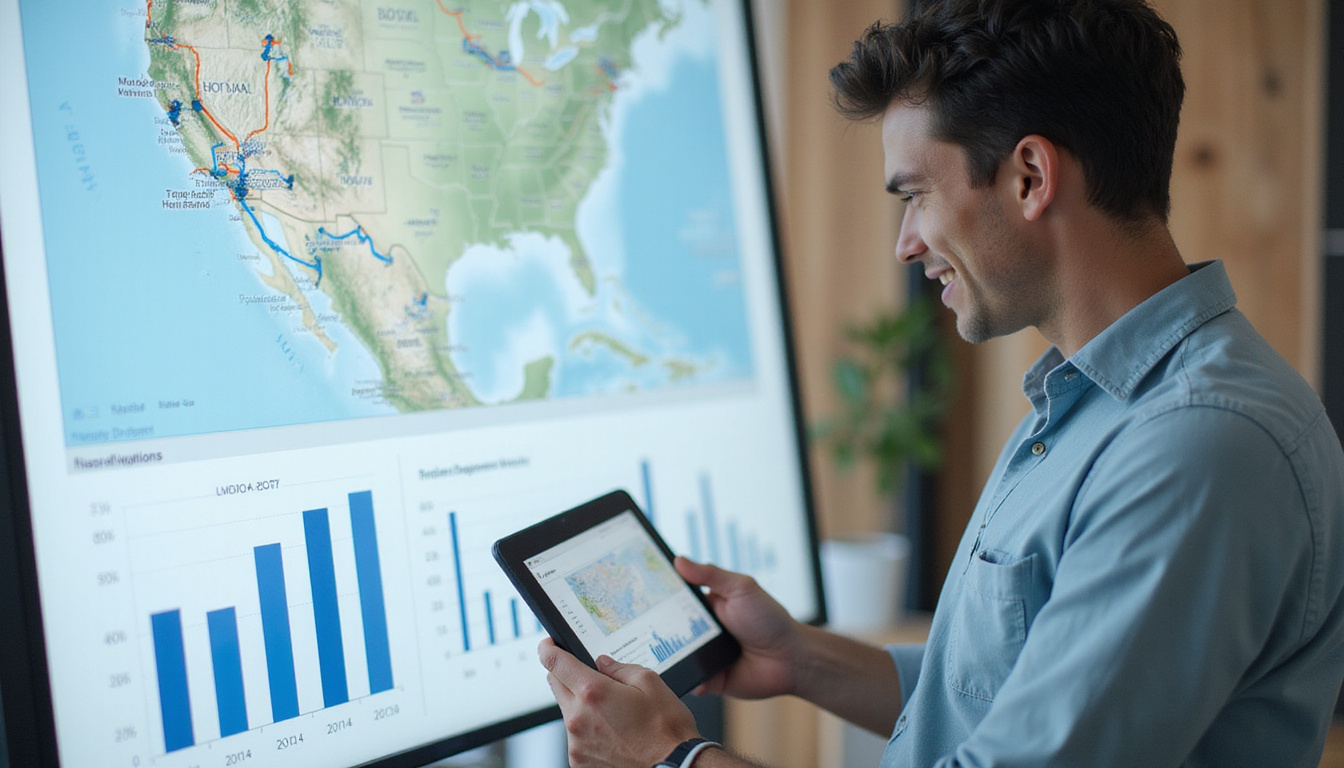
Step 4: Map smarter routes to double your local reach
Doubling reach isn’t just about more miles; it’s about better miles. Your mobile billboard should spend as much time as possible in front of your target audience, not driving empty streets.
How to engineer high-impact routes
-
Overlay customer data on a map
Plot neighborhoods, ZIP codes, or clusters where your current customers live. Prioritize these areas. -
Target predictable congestion zones
Your mobile billboard is most valuable where people are forced to slow down:- On-ramps and intersections with long lights
- Approaches to bridges, tunnels, and toll plazas
- Event ingress/egress routes (stadiums, arenas, fairs)
-
Mirror your audience’s schedule
- Morning: Commute routes, coffee shops, school zones
- Midday: Commercial districts, business parks, lunch corridors
- Evening: Residential areas, gyms, shopping and dining districts
- Weekends: Malls, parks, sports complexes, festivals, and main streets
-
Shadow competitors and category hotspots
Drive past competitor locations or within sight of related businesses (e.g., mobile billboard for a new gym circling other gyms and health clubs). -
Use loops, not lines
Design routes as loops that repeatedly pass through the same high-value corridors. Repetition builds familiarity and recall faster than constant new territory.
Step 5: Integrate your mobile billboard with digital tracking
To prove ROI and optimize, fuse your mobile billboard with your digital marketing.
Tracking tactics that work
-
Unique URLs and landing pages
Create a short URL that only appears on the mobile billboard and redirects to a dedicated landing page. Track visits, conversions, and behavior. -
Dedicated phone numbers
Use a call-tracking number exclusively for the campaign to measure calls, duration, and outcomes. -
Promo codes
Offer an easy-to-remember code like “DRIVE10” for a discount, free item, or bonus. Train staff to record it at checkout or booking. -
“How did you hear about us?” prompts
Add this field to forms and sales scripts with “Truck / mobile billboard” as an option. -
Geofenced ads for reinforcement
Run digital ads within the same neighborhoods and corridors your mobile billboard frequents. When someone recognizes your brand online after seeing your vehicle, click-through and conversion rates usually increase.
Step 6: Optimize for frequency and consistency, not one-offs
One of the “secrets” behind mobile billboard effectiveness is staying visible longer than your competitors think is necessary.
Aim for repeated exposures
A single drive-through is rarely enough. For local campaigns, design for repeat exposure:
- Run core routes at consistent times daily or weekly
- Keep your primary message unchanged for at least 4–8 weeks
- Use subtle seasonal tweaks (offers, colors) while keeping branding constant
Use your fleet as a constant presence
If you operate multiple vehicles:
- Standardize branding across all of them
- Rotate which vehicles take the highest-value routes
- Stagger schedules so your mobile billboards appear at various times around town, multiplying reach
A simple checklist for your first (or next) mobile billboard campaign
Use this quick list to avoid common pitfalls:
- Clear, single goal defined
- Specific target audience and neighborhoods mapped
- Primary message: one benefit, one call to action
- Design passes the three-second readability test
- Short URL / landing page created and tested
- Dedicated phone number and/or promo code set up
- Routes built around congestion, customers, and competitors
- Schedule aligned with audience routines and events
- Tracking and reporting plan in place
- Campaign length: at least 4 weeks for meaningful data
FAQs about mobile billboard advertising
1. How much does a mobile billboard cost for a local business?
Pricing varies widely by city and format. Wrapping an existing company vehicle as a mobile billboard might cost a one-time fee of a few thousand dollars, while renting a dedicated mobile billboard truck typically runs on a weekly or monthly rate. Many small businesses start with wrapping their own fleet, then add short, intensive truck campaigns for product launches or special promotions.
2. Are mobile billboard trucks effective for small markets?
Yes. A mobile billboard truck can be especially effective in small and mid-sized markets where there’s less advertising clutter and fewer large brands dominating. In those environments, even one well-designed vehicle can quickly feel omnipresent, especially when it follows smart routes and appears at community events and popular gathering spots.
3. How do I track ROI from a mobile billboard campaign?
The best approach is to combine multiple tracking methods: unique URLs and landing pages, call-tracking numbers, promo codes, and “How did you hear about us?” questions in your intake process. Set these up before your mobile billboard hits the road, then measure leads, sales, and brand searches during the campaign compared to your baseline.
Turn your daily driving into a 24/7 local awareness engine
Every day, vehicles are already crisscrossing your city, passing thousands of ideal customers stuck in traffic, walking to work, or waiting at lights. With a strategically designed mobile billboard, you can transform those ordinary routes into a constantly working marketing channel that keeps your brand top of mind wherever your customers go.
If you’re ready to turn local traffic into real traffic for your business, start by mapping your ideal routes, clarifying one powerful offer, and designing a mobile billboard that can’t be ignored in three seconds or less. From there, integrate simple tracking, refine your routes, and keep your message consistent. The sooner your brand starts rolling through your market, the sooner your local reach—and your revenue—can double.