
Local print advertising is still one of the most reliable ways to get real people through your doors—especially if you run a brick‑and‑mortar business. While digital marketing grabs most of the headlines, smart owners quietly use local print advertising to reach customers where it matters most: in their neighborhoods, at their kitchen tables, and on their daily commutes.
Below are practical, battle‑tested strategies to help you turn every printed piece into measurable foot traffic and sales.
Why local print advertising still works in a digital world
Despite the shift to online media, print is far from dead—particularly at the local level.
- Local audiences still engage with print. Community newspapers, mailers, and bulletin boards are where people look for nearby deals and events.
- Print builds trust. Printed materials feel more “real” and credible than a fleeting social media ad.
- Less competition. As more businesses go all‑in on digital, your print message has more room to stand out.
Research shows that print readers often spend more time and demonstrate stronger recall with print than with digital ads (source: American Press Institute). For local businesses, that extra attention can directly translate into in‑store visits.
Start with a clear local goal (not just “more customers”)
Before you invest a dollar in local print advertising, decide what specific action you want people to take. “Get more customers” is too vague. Clear goals might be:
- Increase weekday lunchtime traffic by 20%
- Sell out a new product line within 30 days
- Grow your SMS or email list by 200 new local subscribers
- Fill a limited number of appointment slots
Your goal will shape:
- Which local print channels you choose
- What your headline promises
- What offer and call-to-action you use
- How you measure success
The more specific the goal, the easier it is to judge whether your print campaign actually worked.
Choose the right local print channels for your audience
Not all print is equal. The best local print advertising mix depends on where your ideal customers already are.
1. Community newspapers and local magazines
- Best for: Neighborhood awareness, older demographics, families, civic-minded residents
- Advantages: Built‑in trust, editorial context, geographic targeting
- Tips:
- Ask for zoned editions or neighborhood inserts to target only specific areas.
- Place ads near relevant content (e.g., restaurant ads in dining sections, salon ads near lifestyle).
2. Direct mail and door hangers
- Best for: Retail stores, restaurants, home services, clinics, gyms
- Advantages: Physical presence in the home; ability to include coupons, menus, or mini‑catalogs.
- Tips:
- Use Every Door Direct Mail (EDDM) via USPS or your country’s equivalent to target routes around your location.
- Time delivery around paydays, weekends, or seasonal events.
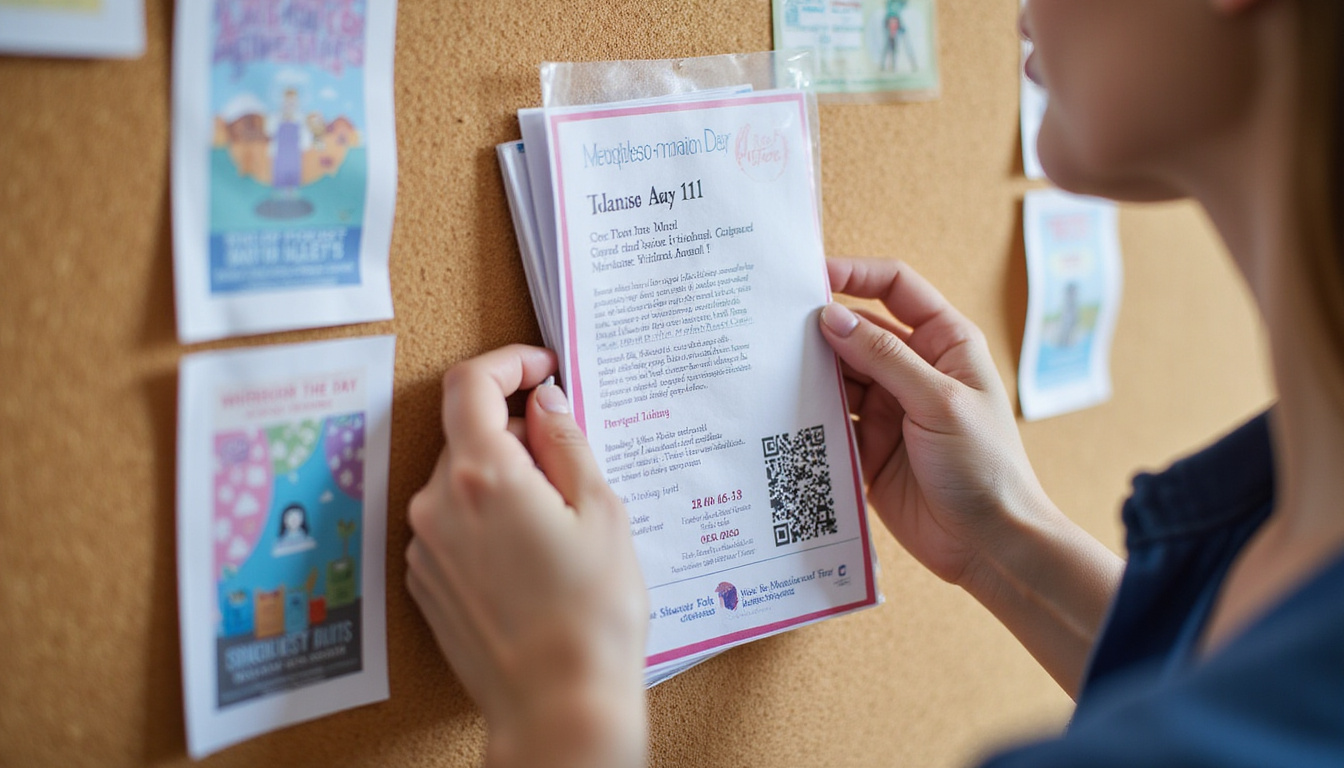
3. Flyers, posters, and bulletin boards
- Best for: Event promotion, quick offers, local awareness
- Advantages: Low cost, highly local, fast to deploy
- Tips:
- Place near complementary businesses (coffee shops, laundromats, community centers, gyms).
- Keep design bold and simple—people may only glance for 1–2 seconds.
4. Local event programs and sponsorships
- Best for: Building reputation and community goodwill
- Advantages: Association with local sports, schools, festivals; captive audience
- Tips:
- Include a “show this program for a discount” offer to track results.
- Add a QR code linking to an event‑specific landing page.
Craft print ads that actually get people in the door
The biggest secret of effective local print advertising is focus. A cluttered, “everything to everyone” ad does nothing. Aim for one main message and one action.
Use a clear, benefit‑driven headline
People skim. Your headline must instantly answer: “What’s in it for me?”
Weak: “Smith Dental – Serving the Community Since 1985”
Stronger: “New Patient Special: $79 Exam, X‑Ray & Cleaning – Limited Spots”
Make the primary benefit—and its local relevance—obvious.
Show your offer, not just your logo
Your logo alone doesn’t drive foot traffic. An irresistible, time‑limited local offer does.
Examples:
- “Buy 1 Entrée, Get 1 Free—Weekdays 3–6 PM (Downtown Location Only)”
- “$20 Off First Massage for Neighborhood Residents (Bring This Ad)”
- “Free Kids’ Haircut with Any Adult Service—This Saturday Only”
Consider anchoring the offer to your goal (e.g., weekday traffic, new product, new customer trial).
Make your call-to-action simple and local
Tell people exactly what to do next—and remind them you’re nearby.
- “Bring this flyer to our Main Street store by June 30 for 25% off.”
- “Call now to book: 555‑1234 – Ask for the ‘Local Neighbor’ special.”
- “Visit us two blocks from the library—next to the post office.”
Adding a small map or recognizable landmark can significantly improve response.
Design elements that make your print ads stand out
You don’t need an award‑winning designer, but you do need clarity.
- Use strong contrast. Dark text on a light background (or vice versa) improves readability.
- Limit fonts. Two fonts maximum—one for headlines, one for body text.
- Feature real photos. Show your actual storefront, products, or happy customers—especially locals.
- Highlight the offer. Use a coupon box, bold text, or color block to separate it from the rest.
- Make contact info unmissable. Phone, address, hours, and website or QR code should stand out.
If you’re unsure, print a test copy and view it from arm’s length. If key information doesn’t pop, simplify.
Track results from local print campaigns (so you stop wasting money)
Many businesses guess at whether local print advertising works. You shouldn’t. A few simple tracking methods can show you exactly which pieces drive foot traffic and sales.
Practical tracking tactics
Use at least one of these for every campaign:
-
Unique coupon codes
- “Bring this ad for code: NEWS15” versus “MAIL20” lets you compare channels.
-
Offer variations by channel
- Newspaper: “Free dessert with entrée”
- Direct mail: “10% off your bill”
- You’ll quickly see which drives more visits or higher average tickets.
-
Custom phone numbers or extensions
- Use a tracking number or “Press 2 for our community newspaper offer” on your phone system.
-
QR codes leading to exclusive pages
- Direct people to a page only promoted in print so you can track visits and redemptions.
-
Ask at checkout
- Train staff to ask: “How did you hear about us?” and log the answers in your POS or a simple tally sheet.
Measure:
- Number of redemptions or responses
- Average order value from each campaign
- Total revenue against print cost
Then double down on what works and cut what doesn’t.
Combine local print advertising with digital for bigger impact
Print becomes much more powerful when it supports your online presence, and vice versa.
Turn print responders into long‑term customers
Include a simple way to stay in touch:
- Text keyword to join your SMS list
- QR code to a sign‑up page with a “locals only” perk
- Contest entry that collects names and emails
Example: “Scan to enter our Neighborhood Giveaway—$100 Gift Card. Winners announced by email.”
Retarget engaged locals online
Once someone joins your list or visits your site via a QR code:
- Show them follow‑up Facebook or Instagram ads with updated offers
- Send reminder emails or texts near expiration dates
- Invite them to VIP local events or preview nights
Your print ad brings them in once; your digital follow‑up keeps them coming back.
Timing and frequency: when local print works best
Even great ads fail if timed poorly. Align your campaigns with local behavior and seasons.
- Payday cycles: Many areas see spending bumps around the 1st and 15th. Time mailers and newspaper ads accordingly.
- Seasonality:
- Back‑to‑school: great for retail, salons, healthcare, tutoring.
- Holidays: gift ideas, catering, events, gift cards.
- Local events: farmers markets, festivals, parades.
- Repetition matters: One‑off ads rarely stick. Aim for consistent presence over 3–6 months in your best‑performing channels.
A useful rule: it often takes 3–7 exposures before someone acts. Plan your print so they see you multiple times in relevant places.
Common local print advertising mistakes to avoid
Learning from others’ missteps can save you money and frustration.
- Too much information. Crowded ads overwhelm readers; they remember nothing.
- Tiny fonts. If older customers are your audience, small text is fatal.
- No clear offer. Vague branding rarely drives immediate foot traffic.
- Wrong geography. Advertising far outside your realistic drive radius wastes budget.
- No tracking. If you can’t measure it, you can’t improve it.
- Inconsistent branding. Make sure store signage, staff, and in‑store materials match your print promises.
A simple 7‑step local print advertising checklist
Use this before launching any new campaign:
- Define a specific local goal and target audience.
- Choose 1–3 print channels that your audience actually uses.
- Craft a single strong offer designed to increase visits or sales.
- Write a clear, benefit‑focused headline and simple call‑to‑action.
- Design for readability and quick scanning (map, photo, bold offer).
- Add trackable elements (codes, QR, phone, unique URL).
- Set a start/end date and a plan to measure results and adjust.
FAQ: local print marketing questions
Q1: Is local print marketing still effective compared to digital ads?
Yes—especially for brick‑and‑mortar businesses that rely on nearby customers. Local print marketing can target neighborhoods precisely, reach people who ignore digital ads, and build trust through tangible materials. When combined with digital follow‑up, it often delivers a strong return on investment.
Q2: What’s the best way to use local print ads for small businesses?
The best way is to start small and focused: pick one or two channels (like direct mail and a community paper), create a single compelling offer that encourages in‑store visits, and track it with unique codes or QR links. Review results after 4–8 weeks, then refine your local print ads based on what actually drives foot traffic.
Q3: How much should I budget for local print advertising campaigns?
Budgets vary by industry and location, but many small businesses start by allocating 5–10% of monthly revenue to marketing, with a portion of that reserved for local print campaigns. Begin with a test budget you can afford to lose, measure results carefully, and scale only the formats and offers that clearly produce profitable sales.
If you’re serious about filling your store, studio, or clinic with nearby customers, local print advertising deserves a fresh look. You don’t need massive budgets—just the right message, targeted to the right neighbors, delivered in the right local print channels and measured carefully.
Start by testing one focused campaign this month. Define your goal, craft an irresistible local offer, choose your best print outlets, and track every response. With each round, you’ll discover exactly what moves your community to walk through your door—and you’ll turn local print advertising into a steady engine for foot traffic and sales.