
Gatefold printing is one of the most powerful—yet underused—formats in print marketing. When done well, it turns an ordinary brochure into a tactile, cinematic reveal that your audience can’t resist opening. Instead of a flat, forgettable handout, gatefold printing lets your brand stage a “big reveal” moment that sticks in people’s minds long after they’ve left your booth, store, or meeting.
Below, we’ll unpack how gatefold formats work, when to use them, design and file-prep tips, and production secrets that help you avoid costly mistakes while creating brochures people actually keep.
What is gatefold printing?
Gatefold printing is a brochure or cover format where the left and right panels fold inward to meet in the center, like two gates closing. When opened, they reveal a larger interior spread that can be used for a dramatic visual, key message, or product story.
Common gatefold types:
- Standard gatefold: Two outer panels fold in to meet at the center, without overlapping.
- Closed gatefold (double gatefold): The two outer panels fold in to meet in the middle, then the whole piece folds again—often used for direct mail or magazine inserts.
- Open gatefold: One side is a single panel and the opposite side is split into two “gate” panels.
Gatefolds are usually printed on a single sheet and then folded. Unlike basic tri-fold brochures, gatefold printing gives you a wide, uninterrupted central space—perfect for bold imagery, data visualizations, or immersive storytelling.
Why gatefold brochures create unforgettable brand experiences
1. Built-in suspense and reveal
A regular brochure hands over all information at once. Gatefold brochures build anticipation:
- The outside “gates” tease your message with intriguing copy or partial images.
- The act of opening the gates is a physical interaction that feels intentional.
- The full reveal on the inside feels like a reward, not just more content.
This psychological “unboxing” effect keeps your audience engaged longer and boosts recall.
2. Immersive storytelling space
With gatefold printing, the interior spread is wider than a standard page, allowing:
- Panoramic brand visuals (e.g., landscapes, facility shots, product ranges)
- Step-by-step journeys laid out across the entire width
- Before-and-after comparisons or timelines
- High-impact hero images paired with a concise headline and CTA
Instead of cramming text into narrow columns, you can treat the inside as a mini poster.
3. Premium, high-value feel
A gatefold brochure signals that your brand has invested extra thought and budget. It’s perceived as more:
- Exclusive – fewer people do it, so it stands out from stacks of tri-folds.
- Considered – the structure suggests intentional storytelling.
- High-end – the format pairs perfectly with heavier stocks and special finishes.
This perceived value can positively influence how prospects perceive your pricing, quality, and credibility.
When to choose gatefold printing over a simple brochure
Gatefold brochures aren’t right for every occasion. Use them strategically when you want to:
- Launch or re-launch a product
- Create a dramatic reveal of the hero product image or show off key features in a spread.
- Explain a complex service or process
- Use the interior to map a customer journey, workflow, or ecosystem visually.
- Highlight a single flagship offer
- Perfect for luxury travel packages, high-end real estate listings, or premium services.
- Introduce a new brand identity
- Use the interior spread to immerse people in your updated visual language.
- Promote a special event or experience
- Festivals, exhibitions, VIP events, and experiential campaigns benefit from the “invitation” feel.
On the other hand, if your message is simple, heavily text-based, or ultra cost-sensitive, a standard brochure may be more efficient.
Popular gatefold sizes and formats
While your printer may offer custom sizes, these are common starting points:
-
8.5" x 11" gatefold
Opens to 17" x 11", with two 4.25" gates folding into the middle.
Ideal for corporate brochures, product sheets, and event programs. -
A4 gatefold (210 x 297 mm)
Opens to 420 x 297 mm, with two 105 mm gates.
Popular in Europe for catalogs, menus, and marketing brochures. -
Oversized gatefold (e.g., 9" x 12")
Often used for luxury brands, property brochures, or high-value proposals.
Discuss size options with your printer early; gatefold panel widths usually need slight adjustments (a few millimeters) for clean closure without buckling.
Design secrets for high-impact gatefold brochures
1. Think in “acts,” not pages
Gatefold printing lets you structure your content like a three-act story:
-
Act 1 – The outer front: Capture attention and intrigue.
- Clear headline that promises value.
- Strong visual or partial image that continues inside.
- Minimal copy—this is the hook, not the whole story.
-
Act 2 – The inner gates: Build curiosity and context.
- Short benefits, key facts, or teasers.
- Use each gate panel as a stepping stone toward the reveal.
- Consider numbering or directional cues to guide reading order.
-
Act 3 – The central spread: Deliver the payoff.
- Bold hero image or primary visual narrative.
- Core value proposition and proof (stats, testimonials, features).
- Singular, prominent call-to-action.
2. Use the central spread as a “stage”
Design the interior spread as if it’s a mini billboard:
- Keep one dominant focal point (product, headline, or image).
- Use negative space strategically so it doesn’t feel cluttered.
- Align typography across the full width for continuity.
- Consider a panoramic photo or illustration that spans the entire interior.
Avoid treating each panel as an isolated page—embrace the full width.
3. Plan for fold interaction
Folds create both opportunities and risks:
-
Avoid critical content on fold lines
Don’t place faces, logos, or small type directly across folds; slight misalignments are common. -
Design seamless crossovers carefully
If an image spans panels, ensure enough bleed and tolerance so minor shifts aren’t noticeable. -
Use folds to hide or reveal details
Teaser text like “Open to discover…” or visual elements that complete only when opened can enhance engagement.
4. Choose typography for clarity and impact
Gatefolds invite larger, more expressive type:
- Use a bold display font for headlines and a clean sans-serif or serif for body copy.
- Keep body text concise; people expect impact, not a booklet.
- Maintain a clear hierarchy using size, weight, and color.
As a rule, assume people will skim first; make the key message readable in 3–5 seconds.
Production and file-prep tips for flawless gatefold printing
1. Understand panel widths and “short folds”
For a standard 8.5" x 11" gatefold:
- The outside panels are often slightly narrower than the central back panel.
- This “short fold” (often 1/16"–1/8") ensures the gates close neatly without buckling or overlapping.
Always confirm final panel dimensions with your printer and set up your document with precise panel sizes—not just three equal columns.
2. Use proper bleeds and safe zones
- Add the printer’s recommended bleed (commonly 0.125" / 3 mm) around all edges.
- Keep important content (logos, small text, faces) at least 0.125"–0.25" from folds and trims.
- For images crossing folds, extend them well into adjacent panels to minimize visible gaps.
3. Choose paper weight and finish wisely
Gatefold printing tends to work best with mid- to heavy-weight papers:
-
Paper weight
- 100–130 lb text or 80–100 lb cover stocks are common.
- Too thin: feels cheap and can show through.
- Too thick: may crack at folds unless scored.
-
Finishes
- Matte or silk for a modern, sophisticated look.
- Gloss for high-impact imagery like cars, resorts, or tech products.
- Soft-touch lamination for premium tactile feel.
For heavier stocks, ask for scoring (pre-creasing) to prevent cracking along folds.
4. Consider coatings and special effects
If budget allows, enhance key elements:
- Spot UV on logos or headlines.
- Foil stamping on premium product names.
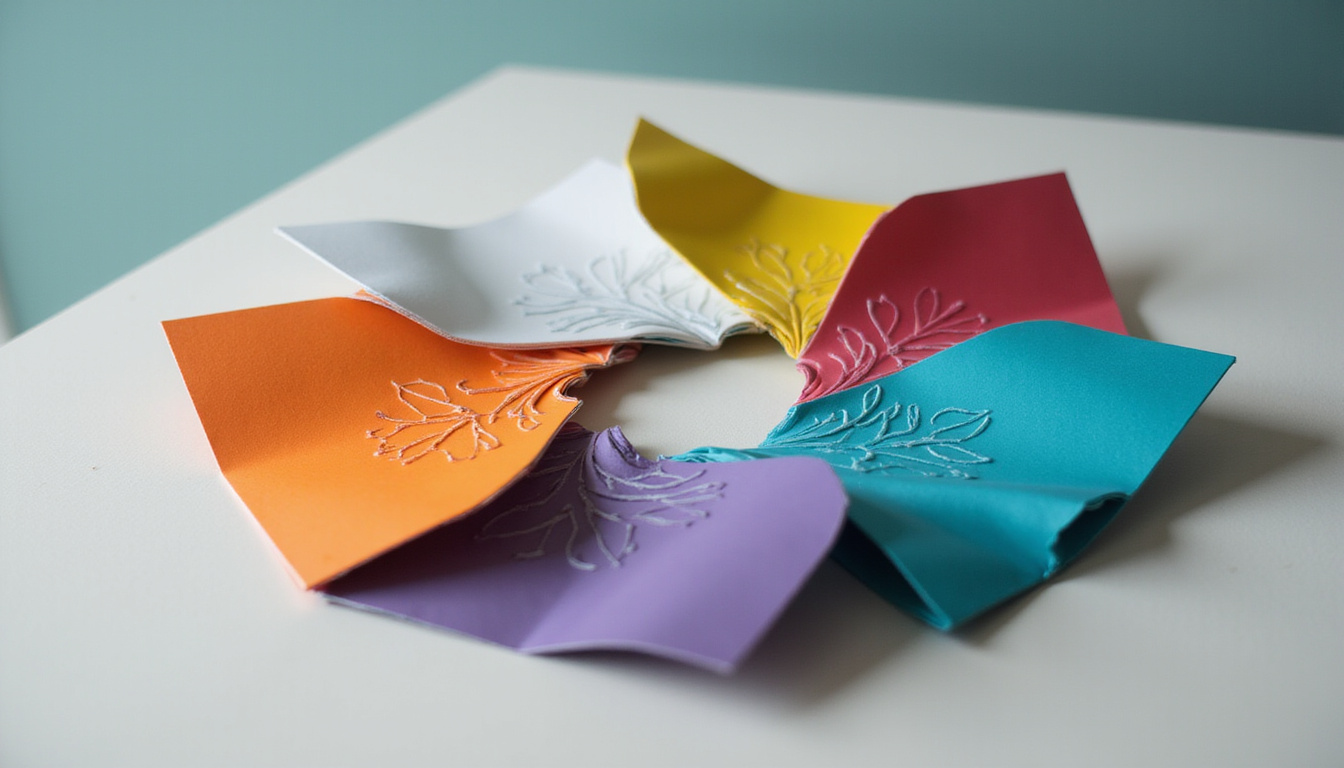
- Emboss or deboss for tactile emphasis.
Special finishes work especially well on the gate panels, encouraging people to touch and open.
5. Request a printed proof
Before committing to a full run:
- Get a hard proof or at least a color digital mockup.
- Check:
- Panel alignment and fold behavior.
- Readability at actual size.
- Color accuracy compared to your brand standards.
This step can prevent expensive misprints and last-minute redesigns.
Cost considerations: Is gatefold printing worth it?
Gatefold brochures often cost more than basic tri-folds or single sheets due to:
- Larger sheet size or more complex imposition.
- Additional folding and sometimes scoring.
- Heavier or premium paper stocks often used with this format.
However, the ROI can be attractive when:
- Each potential customer is high value (e.g., B2B services, real estate, luxury goods).
- The brochure supports a major campaign or launch.
- The goal is memorability and brand elevation, not just information delivery.
According to research cited by the Paper and Packaging Board, 70% of people say paper and packaging make a product feel more premium (source: How Life Unfolds). The same psychological effect applies to premium brochure formats like gatefolds.
Practical use cases and layout ideas
Here are a few scenarios where gatefold printing can shine, with layout concepts you can adapt:
-
Real estate development brochure
- Outer gates: Renderings of exterior and amenities.
- Inner spread: Full panoramic view of the property, floorplan options, key stats.
- CTA: Book a viewing, scan QR code for virtual tour.
-
SaaS or technology platform overview
- Outer gates: Problem statement and bold promise.
- Inner spread: Visual map of the platform ecosystem, integrations, and value.
- CTA: Schedule demo, visit personalized landing page.
-
Destination or hospitality marketing
- Outer gates: Teaser images or “Imagine yourself here” headline.
- Inner spread: Full-width hero image of the destination, package highlights.
- CTA: Limited-time offer or booking link.
-
Trade show or event highlight piece
- Outer gates: Event branding and core theme.
- Inner spread: Agenda snapshot, featured speakers, or experiential zones map.
- CTA: Register now, visit booth, or book 1:1 sessions.
Simple checklist for successful gatefold brochures
Use this quick list before sending files to print:
- Panel sizes confirmed with printer and set correctly.
- Bleeds and safe zones applied; no critical content on folds.
- Story arc mapped: tease outside, reveal inside.
- Central spread designed as a single, unified experience.
- Fonts embedded or outlined; images at 300 dpi.
- Paper stock, finish, and scoring discussed with printer.
- Printed proof reviewed and approved.
Q1: What is a gatefold brochure vs a tri-fold?
A gatefold brochure has two side panels that fold inward to meet in the center, creating a wider interior spread, whereas a tri-fold divides the sheet into three equal panels that fold over each other. Gatefold printing is better for dramatic visuals and immersive layouts; tri-folds are more basic and text-heavy.
Q2: How much does gatefold printing usually cost compared to standard brochures?
Costs vary by size, quantity, and paper, but gatefold printing typically runs higher than simple tri-fold brochures due to extra folding and larger sheet size. For short runs or premium campaigns, the improved impact and perceived value often justify the price difference.
Q3: Can I use gatefold brochure printing for direct mail campaigns?
Yes. Closed gatefold brochure printing is popular for direct mail because the folds protect the interior and create a compelling reveal. Just be sure to confirm mailing size, weight limits, and address/indicia placement with your printer or mail house before finalizing the design.
Turn your next brochure into a branded experience
If your current brochures feel forgettable, it’s time to rethink the format—not just the design. Gatefold printing gives you a powerful storytelling canvas, a built-in reveal, and a premium tactile experience that digital alone can’t match. Work closely with your printer on sizes, folds, and finishes, and treat the interior spread like a stage for your brand’s biggest promises.
Start planning your next gatefold brochure now: outline the story you want to tell, sketch how it unfolds panel by panel, and collaborate with a designer and printer who understand the nuances of this format. With the right strategy and execution, your brochures won’t just inform—they’ll create unforgettable brand experiences that move people to act.