
Print Finishing Techniques That Transform Ordinary Prints Into Luxury Pieces
In a crowded marketplace, the difference between “good” and “unforgettable” often comes down to one thing: print finishing. You can have impeccable design and high-quality paper, but without the right finishing touches, your brochures, business cards, packaging, and invitations may still feel ordinary. Print finishing techniques are what give printed materials that tactile, visual, and emotional edge that screams quality and luxury.
Below, you’ll find a practical, people-first guide to the main print finishing methods, what they do, when to use them, and how to combine them for maximum impact.
What Is Print Finishing and Why Does It Matter?
Print finishing refers to all the processes applied to a printed sheet after ink hits the paper: cutting, folding, coating, embossing, foiling, binding, and more. These steps shape the final look, feel, and durability of your printed piece.
Why it’s worth your attention
- Perceived value: A simple spot UV or foil accent can make a $0.20 business card feel like a $2 one.
- Brand differentiation: Texture, gloss, and depth help your brand stand out in a stack of similar print pieces.
- Function and durability: Lamination, varnishes, and binding not only look good; they protect and extend the life of your print.
- Customer experience: Luxury brands know that the unboxing or first-touch moment can be as important as the product itself.
If your goal is to create a high-end, memorable impression, investing in print finishing is often more cost-effective than constantly reprinting or redesigning.
Core Coating Techniques: From Subtle Protection to High-Gloss Drama
Coatings are among the most common print finishing options because they combine aesthetics with protection.
Aqueous coating
Aqueous coating is a fast-drying, water-based coating applied inline on press.
Best for:
- Brochures, postcards, catalogs, packaging
- Medium to large runs where durability matters
Pros:
- Eco-friendlier than many alternatives
- Adds a subtle gloss or matte finish
- Protects from scuffs and fingerprints
UV coating
UV coating uses ultraviolet light to cure a liquid coating into a hard, high-gloss surface.
Best for:
- Premium business cards
- High-impact covers and postcards
- Consumer packaging that must “pop” on the shelf
Pros:
- Extremely glossy and eye-catching
- Excellent rub and scratch resistance
- Enables special effects like spot UV and raised UV
Spot UV and raised UV
Spot UV applies UV coating selectively to chosen areas; raised UV adds tactile height.
Why it feels luxurious:
- Visual contrast: Gloss on top of matte backgrounds draws the eye.
- Tactile interest: Raised UV lets you “feel” logos, typography, or patterns.
- Precision detail: Great for highlighting key brand assets.
Use spot or raised UV sparingly for best effect—too much and the piece can look busy or cheap rather than premium.
Foil Stamping and Digital Foiling: Instant Luxury Shine
Nothing says “premium” quite like the shimmer of metallic foil.
Traditional foil stamping
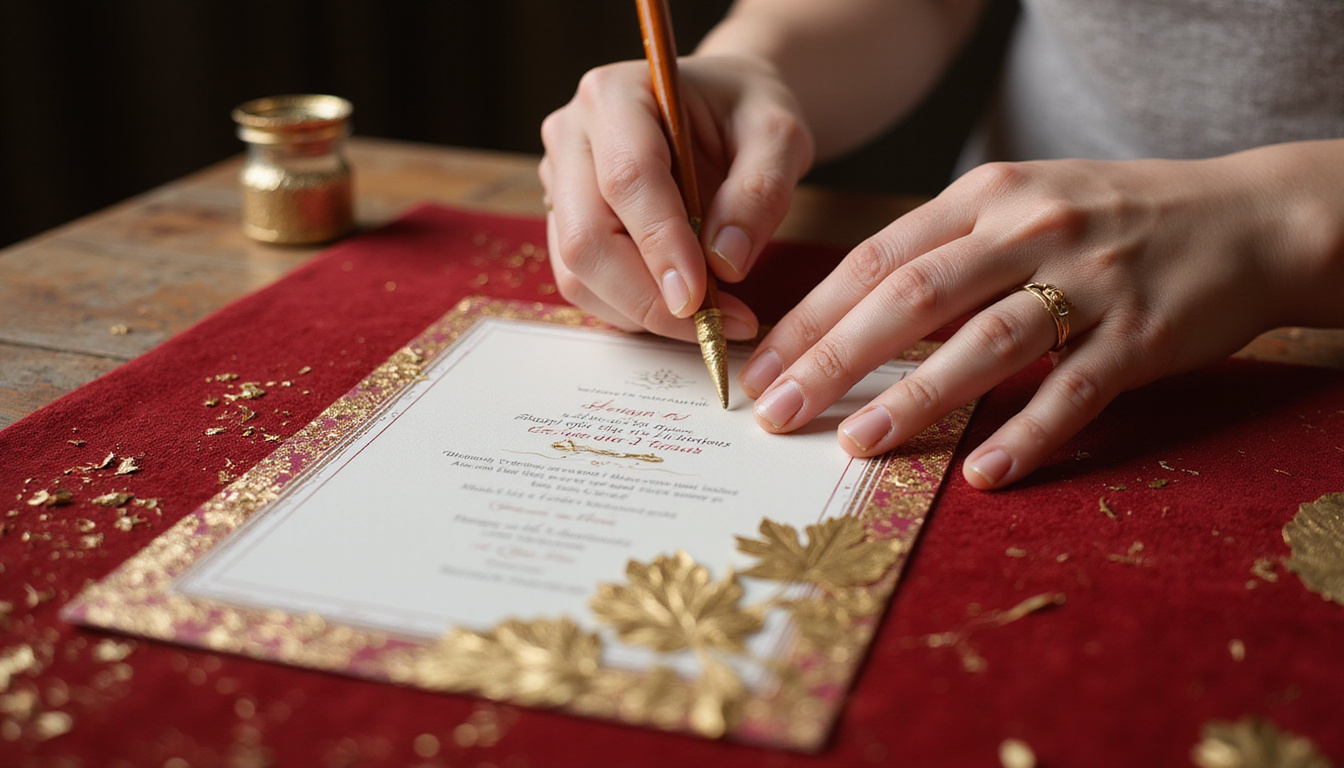
Foil stamping uses heat, pressure, and a metal die to transfer metallic or pigmented foil onto paper.
Best for:
- Luxury invitations and stationery
- Rigid and folding carton packaging
- High-end book covers and certificates
Foil options include:
- Classic metallics: gold, silver, copper
- Holographic foils
- Colored foils (e.g., deep blue, rose gold, black foil)
- Specialty foils: pearlescent, matte metallics
Why brands love it:
- Strong association with luxury and prestige
- Crisp, sharp edges and dense metallic coverage
- Works brilliantly with textured papers and dark stocks
Digital foiling
Digital foiling (or sleeking) uses toner and heat to apply foil without traditional dies.
Advantages:
- Cost-effective for short runs and personalization
- Faster setup and turnaround
- Great for variable data (e.g., individual names in foil)
If you’re printing small quantities—like a limited-edition run or personalized invitations—digital foiling gives you the luxury look without the traditional die cost.
Embossing and Debossing: Elevating Print Through Texture
Where foiling brings shine, embossing and debossing bring dimension.
Embossing
Embossing raises selected elements above the paper surface using a metal die and counter-die.
Common applications:
- Logos on business cards
- Patterns on packaging
- Seals on certificates
- Letterhead branding
Embossing can be blind (no ink or foil, just paper raised) or combined with ink, foil, or varnish for added emphasis.
Debossing
Debossing presses elements into the paper, creating an indented effect.
Why it feels luxurious:
- Tactile depth: People instinctively run their fingers over debossed elements.
- Subtle sophistication: Especially effective on thick, soft-touch or cotton papers.
- Pairs beautifully with foil: Foil-debossing (foil pressed into the sheet) is a hallmark of luxury packaging and stationery.
When to choose which? Embossing is often better for logos you want to stand out visually; debossing can feel more understated and refined.
Specialty Laminations and Soft-Touch Finishes
Lamination bonds a protective film to the surface of printed materials. Premium laminations do far more than protect—they transform how your print feels.
Gloss, matte, and satin laminate
- Gloss: Very shiny, enhances color saturation and contrast.
- Matte: Soft, non-reflective, sophisticated; ideal for text-heavy pieces.
- Satin/velvet: A balance of both, with gentle sheen.
Soft-touch laminate
Soft-touch laminate (or soft-touch coating) creates a velvet-like, rubberized feel.
Why it’s popular in luxury print:
- Instantly signals “premium” the moment it’s touched
- Pairs well with spot UV or foil for visual and tactile contrast
- Often used on high-end packaging, book covers, and business cards
Combine soft-touch lamination with metallic foil or spot UV for a powerful contrast: a velvety background with glossy or metallic highlights.
Die-Cutting and Unique Shapes: Beyond the Standard Rectangle
Die-cutting uses a custom-made metal die to cut paper into specific shapes or create windows and cut-outs.
Common luxury applications:
- Packaging with peek-a-boo windows
- Custom-shaped hang tags and labels
- Business cards or folders with distinctive silhouettes
- Intricate invitation borders or lace-like patterns
Creative die-cutting instantly elevates perceived value, but be mindful of:
- Costs: Custom dies add setup costs; plan for them in your budget.
- Structural integrity: Complex shapes on thin paper can tear easily.
- Brand alignment: Shapes should support your message, not distract from it.
For shorter runs or prototypes, digital die-cutting (using a plotter or laser) may be available, reducing or eliminating the need for metal dies.
Binding Methods That Feel Premium in the Hand
If you’re producing brochures, catalogs, or books, binding is a key component of print finishing.
Saddle stitching
Pages are folded and stapled along the spine.
- Economical and common for shorter documents
- Works best for smaller page counts (usually up to 64 pages or so)
Not inherently “luxury,” but can be elevated with premium paper and covers.
Perfect binding
Pages are glued at the spine and trimmed to create a flat, book-like edge.
Best for:
- Lookbooks and product catalogs
- Softcover books
- Annual reports
Perfect binding feels more substantial than saddle stitching, especially with a thick cover and added finishes like soft touch and foil.
PUR and sewn binding
- PUR (polyurethane reactive) binding: Stronger glue for longevity and flexibility.
- Sewn binding: Signatures of pages are stitched before gluing, often used in high-end books.
If longevity and premium feel are crucial—art books, coffee-table books, luxury brand catalogs—ask your printer about sewn or PUR binding options.
Combining Print Finishing Techniques for Maximum Impact
The most luxurious pieces usually combine multiple techniques. The key is thoughtful restraint and alignment with your brand.
Effective combinations
-
Soft-touch laminate + gold foil + debossed logo
Ideal for high-end rigid or folding cartons, premium business cards, or invitation suites. -
Matte laminate + spot UV on images or headlines
Great for brochures, covers, and presentation folders where you want key messages to pop. -
Blind emboss + colored paper + edge painting
Perfect for minimal, design-forward brands and luxury stationery. -
Die-cut window + foil stamping + textured stock
A strong choice for product packaging where the product peeks through.
Avoiding overkill
- Limit yourself to 2–3 major finishing effects on one piece.
- Consider legibility—heavy texture or gloss can interfere with reading.
- Always request printed samples or a proof before committing to a full run.
Practical Tips for Planning Luxury-Level Print Finishing
Before you brief your designer or printer, keep these best practices in mind:
-
Define the purpose first
Are you aiming to impress investors, woo luxury customers, or create a keepsake? Your goals will determine which print finishing options are worth paying for. -
Choose paper stock early
Many finishes depend on stock thickness and composition. Embossing, debossing, and certain foils need heavier or specific types of paper to look right. -
Budget realistically
Each extra process—foil, embossing, die-cutting—adds setup and run cost. Allocate budget to the finishes that matter most to your audience’s first impression. -
Request a production consultation
Talk to your printer early in the design phase. They can advise not only on what’s possible, but also on what’s reliable and cost-effective at your quantities (source: Printing Industries of America). -
Ask for dummies and swatch books
Handling physical samples of paper, foil, and coatings will give you a much clearer sense of the final effect than on-screen mockups alone.
Quick Reference: Key Print Finishing Options
Use this checklist as you plan your next luxury print project:
- Coatings:
- Aqueous (gloss/matte)
- UV coating
- Spot UV / Raised UV
- Metallics:
- Traditional foil stamping
- Digital foiling
- Texture & depth:
- Embossing / Debossing
- Textured stocks
- Soft-touch laminate
- Shape & structure:
- Die-cutting
- Custom folds
- Premium binding (perfect, PUR, sewn)
- Details:
- Edge painting or gilding
- Custom endpapers (for books)
- Ribbons, belly bands, or sleeves (for packaging)
FAQ About Print Finishing and Luxury Print Pieces
Q1: What is print finishing in printing, and when should I use it?
Print finishing in printing refers to all the enhancements added after the core printing is done—such as coatings, foils, embossing, laminating, binding, and die-cutting. You should consider it any time you want to increase perceived value, durability, or differentiation, especially for customer-facing materials like business cards, packaging, invitations, and brochures.
Q2: Which print finishing services add the most luxury for the money?
Some of the most cost-effective luxury print finishing services are soft-touch lamination, spot UV, and selective foil stamping. A well-placed foil logo on a soft-touch card or package, for example, can dramatically boost perceived quality without requiring multiple complex processes.
Q3: How do I choose the right paper and print finish for my project?
Start with your brand positioning and use case. For a minimalist luxury brand, thick uncoated or cotton paper with blind debossing may work best. For a bold, contemporary brand, glossy or matte laminate with spot UV and vibrant colors can be more appropriate. Collaborate with your printer to match paper weight and finish to the techniques you want—they’ll help ensure your print finishing choices are technically sound.
Turn Your Next Print Project into a Luxury Experience
Your audience makes subconscious judgments the moment they touch your printed materials. Smart use of print finishing can transform a simple card, brochure, or package into a tangible expression of your brand’s value and attention to detail.
If you’re planning a new print project—whether it’s a rebranded business card, a high-end product box, or a coffee-table catalog—now is the perfect time to explore premium finishes. Talk with a quality printer, request samples, and map out which techniques will best tell your brand story through texture, shine, and shape. With the right print finishing strategy, your next piece won’t just be seen; it will be remembered and kept.