
Transit Advertising Strategies to Dominate Urban Attention and Sales
Transit advertising has become one of the most powerful ways to cut through urban noise, reach people on the move, and turn everyday commutes into high-impact brand moments. In cities where attention is fragmented and competition is fierce, a smart transit advertising strategy can deliver consistent impressions, strong recall, and measurable lifts in sales—often at a lower cost than many digital channels.
Below are practical, people-first strategies to plan, execute, and optimize transit campaigns that actually move the needle for your brand.
Why Transit Advertising Works in Cities
Transit advertising taps into an environment where people are:
- Stuck (on buses, trains, platforms, in traffic)
- Looking around (few alternative distractions, especially underground)
- Repeatedly exposed (same routes, same stops, same vehicles)
This combination creates ideal conditions for brand recall and message retention.
Key advantages of transit advertising in urban markets:
- High frequency: Commuters see the same placements multiple times per week.
- Mass reach: One bus route or subway line can reach hundreds of thousands monthly.
- Location relevance: Ads appear near stores, campuses, entertainment districts, and business hubs.
- Format flexibility: From bus wraps and station takeovers to interior cards and digital screens.
When done right, transit media functions as both awareness and performance marketing—boosting brand recognition while nudging people toward action, whether that’s store visits, app downloads, or online purchases.
Know Your Objective: Awareness, Consideration, or Conversion?
Before you design a single ad, clarify what you want transit advertising to achieve. Your creative, formats, and placements will differ based on your primary goal.
Brand Awareness
If your goal is to be recognized:
- Focus on big, bold visuals (bus wraps, rail exterior, station domination).
- Use simple, memorable messages and logos.
- Prioritize high-traffic routes and busiest stations.
Consideration & Preference
If you want people to choose you over alternatives:
- Highlight your key benefits or differentiators.
- Use multi-panel interior cards that explain more detail.
- Reinforce social proof (ratings, testimonials, awards).
Conversions & Sales
If you’re driving immediate action:
- Add clear CTAs: “Order Now”, “Download the App”, “Visit Today”.
- Use QR codes and short URLs for tracking.
- Geo-target placements near your stores or service areas.
Defining your objective upfront prevents generic “brand wallpaper” and helps you measure success in a meaningful way.
Match Transit Formats to Your Audience and Message
Different transit advertising formats lend themselves to different goals and audiences. Think about where your audience spends most of their time and how they interact with the transit system.
Bus Advertising
- Exterior wraps & kings: Ideal for broad awareness and citywide coverage.
- Tail ads: Great for highway visibility; strong for drivers and passengers in traffic.
- Interior cards: Perfect for longer dwell time—explain benefits, offers, or steps.
Best for: Local businesses, retail, QSR, home services, healthcare, and any brand needing neighborhood visibility.
Rail & Subway Advertising
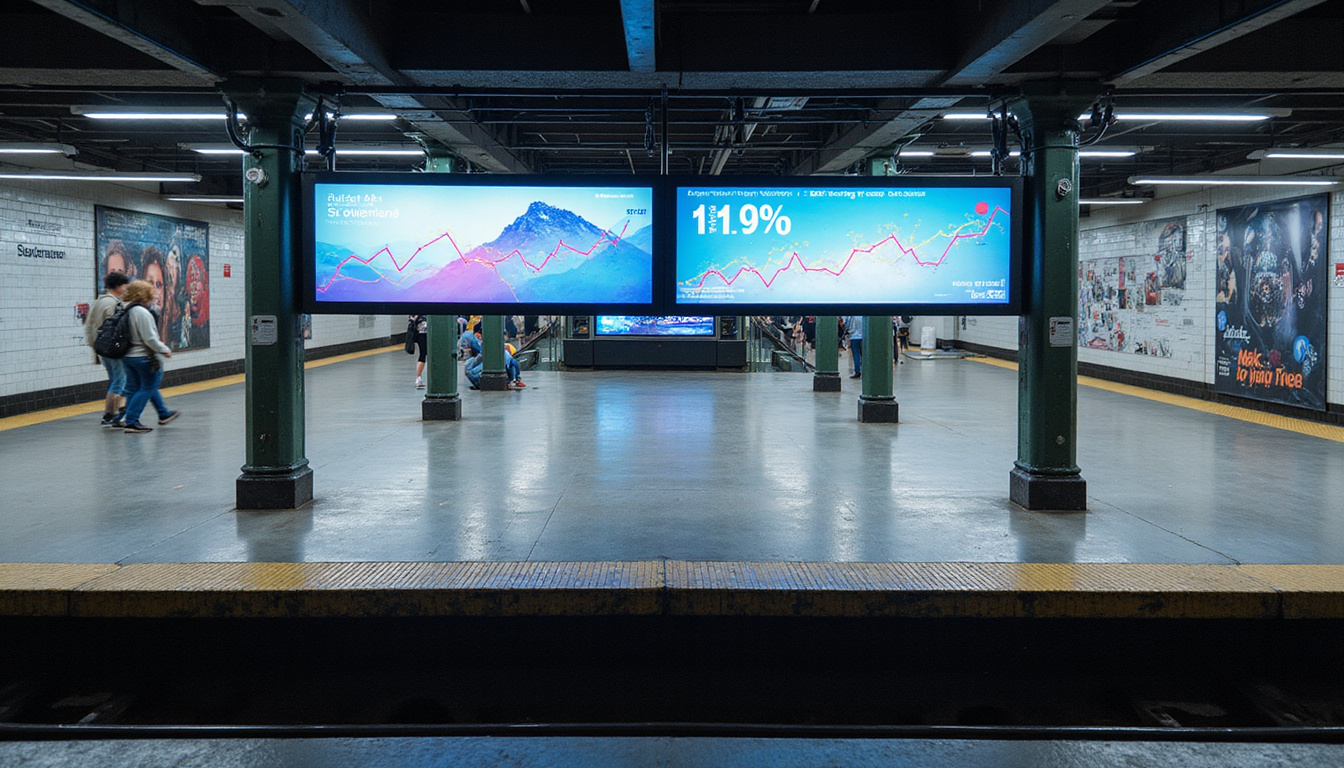
- In-car posters & digital screens: High dwell time; riders are often captive and bored.
- Platform posters: Excellent for reach and repetition during wait times.
- Station takeovers: Dominant presence that can turn a station into a branded experience.
Best for: E-commerce, apps, fintech, universities, entertainment, and any brand targeting young professionals or students.
Streetcar, Tram, and Light Rail
- Similar benefits to bus + rail, but often in dense urban or tourist-heavy corridors.
Best for: Tourism, nightlife, attractions, consumer brands, and events.
Align your transit formats with how your target customers actually move through the city, not just what’s available or cheapest.
Creative That Commands Attention in Motion
Transit advertising lives in a fast, crowded environment. Your creative has to be readable at a glance and compelling enough to stick.
Keep It Ridiculously Simple
For moving formats (bus sides, train exteriors, taxi tops):
- Aim for 5–7 words max in your main headline.
- Use large fonts and high-contrast color combinations.
- Feature one focal visual—not a collage.
- Make your logo and name prominent and readable from a distance.
For static or interior formats (station posters, interior cards):
- You can add a bit more information, but still avoid clutter.
- Use clear hierarchy: headline → key benefit → CTA.
Make It Locally Relevant
Urban commuters respond strongly to context:
- Reference neighborhoods (“Brooklyn’s fastest grocery delivery”).
- Call out routes or lines (“Perfect for the Red Line rush”).
- Use city-specific slang or landmarks judiciously.
Localized messaging gives transit advertising a sense of personalization and immediacy.
Design for Action, Not Just Impressions
To directly drive sales:
- Include a strong CTA with a tangible benefit: “Get 20% off your first ride – Scan to start”.
- Use scannable QR codes sized for real-world distances.
- Offer short, memorable URLs for those who prefer to type.
Commuters frequently use their phones during transit, making it an ideal environment for mobile-focused CTAs.
Targeting Smartly: Routes, Times, and Demographics
You can’t target individuals with transit advertising like you can with digital ads—but you can target routes, vehicles, and locations strategically.
Map Routes to Your Ideal Customer
Work with agencies or transit authorities to access ridership and demographic data:
- Which lines serve business districts vs. residential areas?
- Which routes pass universities, malls, hospitals, or tech hubs?
- Which stations see the highest footfall during peak hours?
Match your ideal customer profile to specific routes, lines, and stations where they are most likely to travel.
Time-of-Day & Day-of-Week Considerations
While you can’t change your printed creative by time of day, digital transit screens and programmatic placements often allow dayparting:
- Morning commute: Coffee, news apps, productivity tools, finance.
- Evening commute: Dining, streaming, entertainment, retail, fitness.
- Weekends: Events, tourism, leisure activities, family attractions.
Even for static media, knowing when you’re most visible helps you coordinate digital or social campaigns to run in parallel.
Integrating Transit Advertising with Digital for Maximum Lift
Transit advertising works best when it’s not isolated. Combine it with your digital channels so commuters see you online and on the street.
Reinforce the Same Visual Language
- Match colors, taglines, and imagery across transit, social, and display.
- Use the same key phrase or promise everywhere for faster recall.
- Feature your outdoor creative in social posts and stories (“Spotted our new bus wrap?”).
Consistency multiplies impact and strengthens memory.
Use Geo-Targeted Digital Ads
Layer mobile and digital advertising around your transit placements:
- Run mobile display or social ads within geofences around key stations.
- Use ride-share or navigation apps with contextual ads near busy lines.
- Retarget users who engaged with your brand in those areas.
Commuters might see your ad on a train and later notice your promoted post on Instagram, making them more likely to click.
Measure Online Lift During Transit Flights
While attribution isn’t perfect, you can still detect impact:
- Track brand search volume before, during, and after campaigns.
- Monitor direct traffic and app downloads by city or region.
- Tie promo codes or QR links to specific transit campaigns to attribute conversions.
Research consistently shows that out-of-home, including transit, improves overall media effectiveness and boosts online activity when used as part of an omnichannel plan (source: Out of Home Advertising Association of America).
Measuring Success: Metrics That Actually Matter
To justify investment in transit advertising and optimize over time, you need a clear measurement framework.
Core Metrics to Track
- Reach & impressions: Provided by the transit media vendor; indicates scale.
- Frequency: Average number of times a person is likely to see your ad.
- Website traffic & app installs: Especially from local regions where transit ads run.
- Promo redemptions: Use station- or route-specific codes when possible.
- Brand lift: Survey-based measures of awareness and consideration before/after campaigns.
- Store visits: For retail, use traffic-counting tools or footfall analytics where available.
How to Attribute Impact
While you won’t get click-level tracking like digital, you can still:
-
Run city-level experiments
Launch in one city or region first, compare performance against a similar control market without transit advertising. -
Use unique creative markers
Distinct promo codes, vanity URLs, or QR landing pages help isolate transit-driven engagement. -
Short “on/off” test periods
Run transit campaigns in on/off cycles and compare KPIs across those time windows.
Over time, these tests will clarify how much transit advertising contributes to sales and which strategies work best.
Budgeting and Buying: Getting More Value from Every Dollar
Transit advertising can be surprisingly cost-effective, but only if you buy smart.
Tips for Smarter Media Buying
- Bundle routes or stations: Packages often reduce your effective CPM.
- Ask for performance data: Request ridership stats, dwell times, and prior campaign examples.
- Negotiate added value: Bonus weeks, extra panels, or inclusion in digital screens.
- Test before scaling: Start with a focused route or station cluster, then expand.
Balance High-Impact and Always-On
Combine:
- High-impact formats: Launch with a station takeover or bus wraps for buzz.
- Always-on formats: Maintain presence with interior cards or standard posters to sustain awareness.
This approach gives you both “wow factor” and ongoing visibility without breaking the bank.
Common Transit Advertising Mistakes to Avoid
Even experienced marketers misfire with transit campaigns. Avoid these pitfalls:
- Too much text: People won’t read paragraphs from a moving bus.
- Tiny logos or CTAs: If your brand or offer isn’t legible from distance, it’s wasted spend.
- Generic, non-local messaging: Misses the opportunity for city-specific relevance.
- No tracking mechanisms: Makes it hard to prove value or learn over time.
- Running one-off campaigns: Sporadic presence rarely builds real brand memory.
Design your strategy to be clear, measurable, and iterative from the start.
FAQ: Transit Advertising and Urban Marketing
1. Is transit advertising effective for small businesses?
Yes. Transit advertising for small businesses can be extremely effective when you focus on specific routes near your locations, use simple, local messages (“2 minutes from this stop”), and include strong offers or CTAs to drive immediate visits or calls.
2. How much does transit advertising cost in major cities?
The cost of public transit advertising varies widely by city, format, and duration. Interior cards and standard posters are usually the most affordable, while full bus wraps and station takeovers command premium pricing. Many transit systems and agencies now offer packages suitable for modest monthly budgets.
3. Can transit advertising be used to drive online sales and app installs?
Absolutely. Digital-focused transit advertising strategies use QR codes, short URLs, and strong mobile-first CTAs. When combined with geo-targeted mobile or social ads, transit campaigns can significantly increase branded search, direct traffic, and app downloads in the areas where your ads run.
Turn Every Commute into a Sales Opportunity
Urban attention is harder to win than ever—but transit advertising gives you access to millions of daily moments when people are receptive, unhurried, and looking for something to engage with. By pairing clear objectives with the right formats, locally relevant creative, and smart measurement, you can turn city buses, trains, and stations into a powerful sales engine.
If you’re ready to dominate your market’s daily commute, start mapping your key routes, identifying your highest-value touchpoints, and designing transit creative that can’t be ignored. Don’t let your competitors own the streets—claim your share of urban attention and convert it into real, measurable growth.