
Envelope printing is one of the most underrated tools in your marketing toolkit. In a crowded mailbox—physical or digital—your envelope is the first impression. Done well, it can intrigue, delight, and dramatically increase your open rates. Done poorly, it disappears into the stack of boring bills and generic mailers.
This guide walks you through practical, people-focused envelope printing tips that help your mail get noticed, opened, and acted on.
Why envelope design matters for open rates
Every campaign lives or dies by whether your message gets opened. That makes the envelope the “headline” of your direct mail.
Thoughtful envelope printing can:
- Signal that your mail is relevant and trustworthy
- Spark curiosity so recipients feel compelled to open
- Support your brand identity and recognition
- Increase response and conversion rates from the same mailing list
In direct mail testing, envelopes with compelling designs, offers, or personalization often outperform plain ones by a wide margin (source: USPS Delivers).
If you’re paying to print, stuff, and send mail, small improvements in open rates from better envelopes can translate into big gains in ROI.
Start with a clear goal for your envelope
Before you choose colors or typefaces, define what you want the envelope to do:
- Get opened right away?
- Communicate professionalism and trust?
- Create urgency around a limited-time offer?
- Stand out and be memorable?
- Feel personal, like a letter from a friend?
Clarifying the goal shapes every envelope printing decision—size, stock, layout, and messaging—so your design works as a cohesive whole instead of a collection of random choices.
Choosing the right envelope size and format
Your envelope’s size and shape can instantly set it apart. While standard #10 business envelopes are common, they’re also easy to ignore. Consider:
- #10 (business size): Best for invoices, formal letters, and B2B mail. Use design and color to stand out.
- A7 / Invitation sizes: More personal and “special,” ideal for events, fundraising, or premium offers.
- Large formats (9×12, catalog): Convey importance or valuable contents (reports, catalogs, proposals).
- Square envelopes: Unique and eye-catching, but may cost more in postage.
Check with your printer and postal service for machinable sizes and aspect ratios so your envelope printing doesn’t trigger unexpected postage or handling fees.
Pick paper stock that feels as good as it looks
The feel of your envelope is part of the message. Recipients often decide—without consciously realizing—whether to open something based on the tactile impression.
Key choices for envelope printing:
- Weight: Heavier paper feels more premium and substantial. For marketing pieces, 24–28 lb text or 70–80 lb text is common.
- Finish:
- Matte/uncoated feels natural and is easier to write on (good for reply envelopes).
- Smooth coated delivers rich color and crisp graphics.
- Textured (linen, laid, felt) gives a high-end, tactile feel.
- Color:
- White or off-white for formal, professional mail.
- Soft colors (cream, light gray) for subtle differentiation.
- Bold colors for promotions and marketing campaigns.
Higher-quality stock can increase perceived value and trust—especially for financial, legal, nonprofit, or high-ticket product mailings.
Design to stand out in the mailbox
Most envelopes are visually boring. That’s your opportunity.
Use color strategically
- Brand colors: Reinforce recognition and trust, especially for existing customers.
- Accent colors: Use one or two bright accents to draw the eye to key elements (offer, name, teaser).
- Contrast: Ensure strong contrast between background and text for legibility.
Full-color envelope printing (4/0 or 4/4) is more accessible than ever; even a single-color design can look striking when used thoughtfully.
Embrace white space
You don’t need to fill every inch. White space around your logo, address, and teaser copy:
- Makes the envelope feel cleaner and more premium
- Helps key elements stand out
- Reduces visual fatigue and confusion
A simple, focused design is usually more effective than a busy one.
Teaser copy is the short text on the outside that hints at what’s inside. The goal is to provoke curiosity or highlight clear value.
Effective teaser ideas:
- Benefit-driven: “Cut your energy bill by up to 30% starting this month.”
- Offer-focused: “Free gift enclosed for [City] residents only.”
- Urgency-based: “Time-sensitive: Open by March 31 for guaranteed eligibility.”
- Curiosity-driven: “This one decision could save you thousands.”
Keep it brief, specific, and honest. Overhyped or misleading teasers may increase opens once, but hurt trust over time.
When to use a “blind” envelope
A “blind” envelope has no teaser copy and minimal branding—often just a return address, maybe a small logo. This can:
- Make your mail look more personal or official
- Reduce the “junk mail” feel
- Work especially well for fundraising, compliance, and sensitive communications
Test both approaches. For some audiences, bold teaser copy wins; for others, subtlety works better.
Personalization: Your secret weapon
One of the strongest envelope printing tactics is personalization. People are more likely to open mail that clearly looks like it was meant for them.
Ways to personalize envelopes:
- Name: “To Jane Williams” instead of “Current Resident”
- Location: “Exclusive offer for homeowners in Brookside”
- Segmented messaging: Different teaser copy or color schemes for new leads vs. loyal customers
- Handwritten-style fonts: For addresses or notes like “Private” or “A quick note inside”
If budget allows, consider real or simulated handwriting for addressing. Hand-addressed or pseudo-handwritten envelopes often get significantly higher open rates because they feel personal.
Make the address block postal-friendly and reader-friendly
Your design must balance creativity with practicality. If the mail can’t be delivered efficiently, your campaign fails.
For effective, compliant addressing:
- Leave a clear area (usually center-right) for the recipient address.
- Use high-contrast text, typically dark ink on a light background.
- Avoid printing heavy patterns or images behind the address and barcode zone.
- Keep fonts simple and legible (no ornate scripts) for machine reading.
- Respect postal clear zones for barcodes, postage, and return addresses.
Ask your printer or mail house for a template showing postal-safe areas so your envelope printing doesn’t accidentally interfere with automation.
Logo and branding: Be recognizable at a glance
Your envelope is a brand touchpoint. Even if it isn’t opened, it reinforces your presence.
Best practices:
- Place your logo in the upper left or on the flap—somewhere consistent with your brand system.
- Keep logo size moderate; prominent but not overwhelming.
- Use brand fonts and colors for coherence with the rest of your materials.
- Include a short tagline under your logo if it clarifies what you do.
If your brand is well-known or respected in your market, leaning into recognizable branding can increase trust and open rates.
Add visual elements that support your message
Don’t overdo it, but a small visual element can make your envelope instantly more interesting:
- Icons: A lock icon for security, a gift icon for a bonus, a calendar for an event.
- Subtle patterns: Light, low-contrast patterns on the back flap for a premium feel.
- Images: A small photo or illustration that teases the content inside (e.g., a product shot, a happy customer).
Make sure graphics don’t clash with important functional areas like addressing and postage.
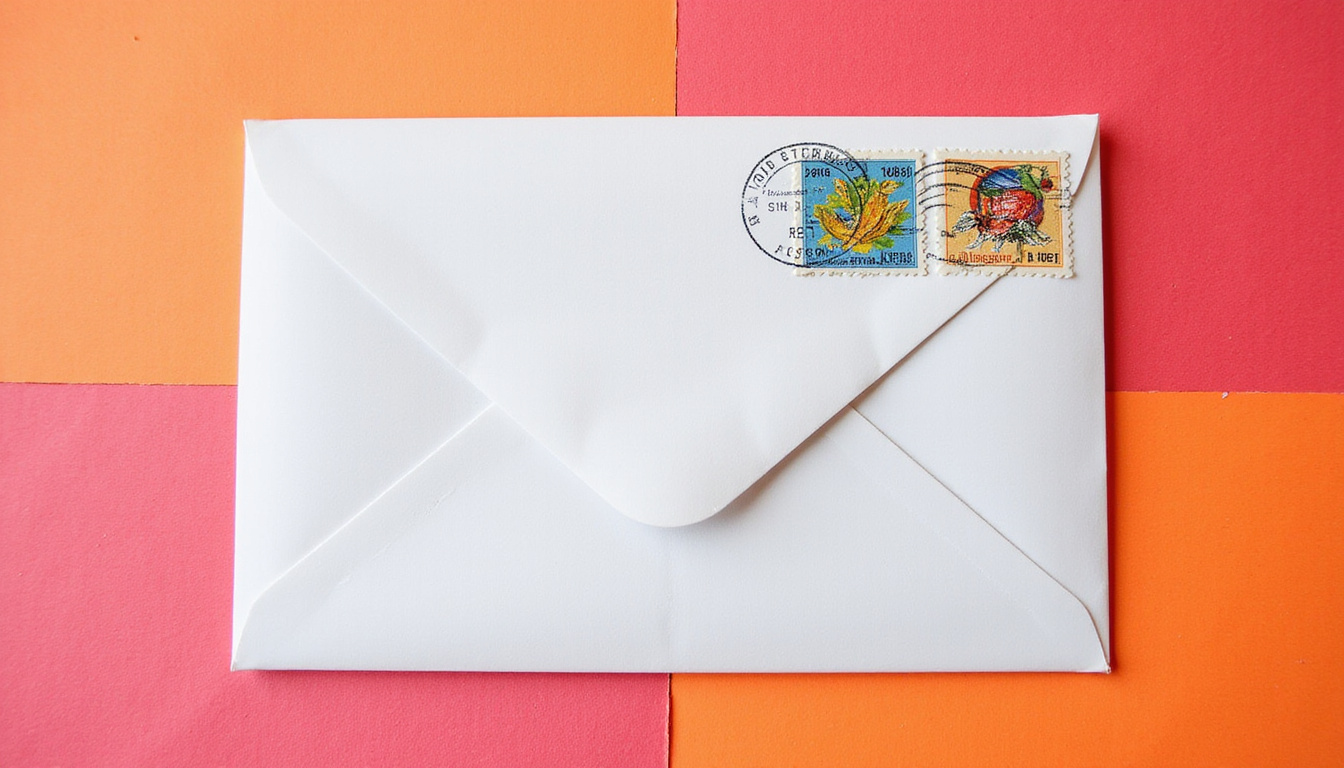
Printing methods and finishes that elevate your envelope
While you can keep things simple, certain printing techniques can make your mail feel more valuable and intriguing.
Printing methods
- Digital printing: Ideal for short runs, variable data (personalization), and fast turnaround.
- Offset printing: Better for large runs, consistent color, and lower cost per piece at volume.
Discuss with your printer which method suits your budget, quantity, and personalization needs.
Specialty finishes
If you want to truly stand out, consider:
- Spot UV: Glossy highlight on your logo or teaser text.
- Foil stamping: Metallic accents for luxury or holiday campaigns.
- Embossing/debossing: Raised or recessed elements you can feel.
- Soft-touch coating: Velvety feel that surprises recipients.
Reserve these for campaigns where the higher cost is justified by customer value or brand positioning.
Compliance, privacy, and ethics
Your envelope printing should also respect privacy and regulatory requirements:
- Avoid revealing sensitive information: Don’t print diagnoses, financial details, or other private data externally.
- Comply with industry rules: Healthcare, financial services, and government mail often have specific guidelines.
- Be transparent, not deceptive: Don’t mimic official government mail or past-due notices unless it’s legitimately appropriate.
Ethical design builds long-term trust, even in direct response campaigns.
Testing and optimizing your envelope designs
Don’t rely on guesswork. Use A/B tests to find out what actually boosts open rates for your audience.
Variables you can test:
- Size and format (standard vs. invitation vs. large)
- Teaser copy vs. no teaser copy
- Color vs. plain white
- Branded vs. blind envelopes
- Personalization level (name, location, handwriting)
- Different offers or benefit statements on the front
Track open rate proxies (responses, redemptions, calls, visits) by version, and let data guide your next envelope printing run.
Practical checklist for high-performing envelopes
Before you send to print, run through this quick checklist:
- Clear campaign goal defined
- Envelope size chosen for impact and postal efficiency
- Paper stock matches brand and audience expectations
- Design uses color and white space effectively
- Teaser copy (if any) is specific, honest, and compelling
- Personalization strategy planned and data-ready
- Address areas follow postal guidelines
- Logo and branding applied consistently
- Visual elements support, not clutter, the design
- Printing method and finishes chosen for budget and scale
- Legal, privacy, and industry compliance verified
- At least one A/B test planned for this mailing
FAQ: Common questions about envelope printing
Q1: What envelope printing options are best for small businesses?
For small businesses, digital envelope printing is typically best. It allows short runs, full color, and variable data personalization without high setup costs. Choose a standard size (#10 or A7), a mid-weight stock, and test simple color designs before investing in specialty finishes.
Q2: How can I personalize envelopes without overspending on printing?
Use digital printing with variable data only in key areas—recipient name, city, or a personalized line of teaser copy. Keep the rest of the envelope static. This approach adds impact to your envelope printing while controlling costs, especially at modest volumes.
Q3: Are colored envelopes better than white for marketing mail?
Colored envelopes can outperform white envelopes in attention and open rates, but it depends on the audience and message. White often works better for formal or sensitive mail. Test both in your envelope printing strategy, using subtle colors for professionalism and bold hues for promotional campaigns.
Turn your next mailing into a must-open experience
Every envelope you send costs time and money. The design you choose decides whether that investment ends up in the trash or drives real engagement and sales.
By treating envelope printing as a strategic tool—choosing the right format, stock, design, personalization, and messaging—you transform ordinary mail into a powerful, high-ROI channel.
If you’re planning a new campaign, now is the ideal moment to rethink your envelopes. Sketch a few concepts, talk to a quality printer about options, and test a standout design against your current control. Put these tips into practice, and turn your envelopes into irresistible invitations your audience can’t wait to open.