
Offline advertising is still one of the most powerful ways for local businesses to get noticed, drive foot traffic, and build lasting customer relationships. While digital channels get much of the attention, smart offline advertising can differentiate your brand in your neighborhood, reach people when they’re out in the real world, and reinforce your online presence. When done strategically, offline campaigns don’t just raise awareness—they can directly boost sales and long-term visibility.
Below are practical, proven offline advertising strategies you can use to dominate your local market.
Why offline advertising still matters for local businesses
Even in a digital-first world, offline advertising offers three crucial advantages for local businesses:
-
Physical presence in your community
Seeing your brand on a local billboard, flyer, or storefront creates familiarity and trust that online ads alone can’t match. -
High intent and relevance
People who see your ads while they’re near your business—driving, shopping, commuting—are more likely to take immediate action. -
Stronger recall through repetition
Repeated real-world exposure (signage, print, sponsorships) improves brand recall and recognition, especially in smaller geographic areas.
Studies consistently show that traditional media like TV, radio, and print can significantly influence purchase decisions, especially when combined with digital touchpoints (source: Nielsen). For local businesses, that mix is where the biggest gains happen.
Start with a clear local advertising strategy
Before choosing specific offline advertising tactics, get your fundamentals in place:
-
Define your ideal local customer
Who are they, where do they live, where do they shop, and what problems do they need solved? -
Clarify your message
What is the one core benefit or offer you want people to remember? Keep it short and specific. -
Set measurable goals
Examples: increase walk-ins by 20% in 3 months, add 200 local email subscribers, or boost calls by 30 per week. -
Decide on a geographic radius
Know how far people realistically travel for your product or service (e.g., 5–10 miles for a gym, 1–3 miles for a café). -
Create a simple tracking plan
Use unique phone numbers, QR codes, URLs, or coupon codes per campaign so you’ll know what works.
With these decisions made, your offline advertising will be more focused, more efficient, and easier to optimize.
Use local print media the smart way
Print isn’t dead—especially locally. It’s just misused. Instead of generic brand awareness, use print placements to drive specific, trackable actions.
Local newspapers and community magazines
Local publications are still widely read by homeowners, older audiences, and community-focused readers. To make them work:
- Use eye-catching headlines and strong offers (e.g., “Free Dessert with Any Entrée” or “First Month at 50% Off”).
- Place ads close to related content—like a restaurant ad in the dining section.
- Include a trackable element: a unique promo code, landing page URL, or QR code.
- Time your ads around local events, holidays, or seasonal demand (back-to-school, summer, tax season).
Direct mail to targeted neighborhoods
Direct mail remains one of the most controllable forms of offline advertising:
- Target by ZIP code, income level, home ownership, or distance from your location.
- Use postcards or flyers with bold visuals, short copy, and a clear call to action.
- Add time-limited offers to create urgency.
- Include a map or “We’re just 5 minutes away” message to emphasize convenience.
When repeated to the same audience over several months, targeted mailers can seriously increase local visibility and response.
Outdoor and out-of-home ads: Own your local landscape
Out-of-home (OOH) advertising places your business in the paths your customers travel every day. This can be highly effective for brick-and-mortar locations.
Billboards and posters
Well-placed billboards and posters can act like giant business cards:
- Choose locations near major intersections, shopping centers, or commuter routes.
- Keep your message simple: logo, offer, location (or landmark), and contact method.
- Use large fonts and high-contrast colors; assume people only have 3–5 seconds to read.
- Highlight what makes you unique locally—“Oldest bakery in town,” “Family-owned since 1985,” or “Open 24/7 downtown.”
Transit and street-level advertising
If your city has buses, trams, or a subway, transit ads can deliver repeated local impressions:
- Bus wraps and interior cards let commuters see your brand daily.
- Bench or shelter ads near your store literally guide people to your door.
- Consider bike-share stations, parking garages, or local kiosks for smaller, high-visibility placements.
Again, use clear calls to action and reference proximity: “2 blocks ahead” or “Across from City Hall.”
Leverage in-store and on-premise signage
Your physical location itself can be a powerful offline advertising channel—but only if you treat it as such.
Exterior signage: Make your storefront impossible to ignore
- Use bold, well-lit signs that are visible from multiple angles and distances.
- Add window decals highlighting your best-selling products or signature services.
- Use sidewalk boards (A-frames) to promote daily specials, discounts, or events.
- If appropriate, rotate messages weekly to keep things fresh and signal activity.
A strong storefront not only captures passersby but also reinforces all your other offline advertising efforts.
Interior signage and offers
Once people are inside:
- Use posters, shelf talkers, or counter displays to highlight promotions and upsells.
- Place QR codes near products to encourage email sign-ups or social media follows.
- Promote loyalty programs at checkout—this bridges offline advertising with ongoing digital communication.
Think of every surface as an opportunity to educate, persuade, or invite a next step.
Event-based offline advertising and community presence
For local businesses, visibility isn’t only about media placements—it’s also about showing up in person.
Sponsor local events and teams
Sponsorships are a classic offline advertising tactic for a reason:
- Sponsor youth sports teams, school events, charity runs, or local festivals.
- Get your logo on jerseys, banners, and event programs.
- Add a booth or table if allowed, so you can interact directly with potential customers.
- Offer exclusive discounts to event attendees (tracked via codes or physical coupons).
This positions your business as a community supporter and often yields long-lasting goodwill and word-of-mouth referrals.
Host your own events and workshops
When you bring people to your location, your advertising message is much more likely to convert:
- Host open houses, product demos, tastings, or classes related to what you sell.
- Invite neighboring businesses, local influencers, and community groups.
- Promote the event using flyers, posters, and direct mail, plus your digital channels.
- Provide take-home materials—brochures, coupons, or sample packs—with clear next steps.
Events turn offline visibility into memorable, relationship-building experiences.
Guerrilla and grassroots offline advertising ideas
Not every effective offline campaign requires big budgets. Creative, low-cost tactics can generate attention and buzz.
Handouts, flyers, and door hangers
When done thoughtfully—not spammy—these can be highly targeted:
- Distribute around your location, at nearby offices, or at complementary businesses.
- Add a strong hook: “Show this flyer for 15% off your first visit.”
- Design them to be kept—include a menu, calendar, or mini guide people will want to hold onto.
Branded merchandise and giveaways
Useful items turn your customers into walking advertisements:
- T-shirts, tote bags, pens, magnets, or coffee mugs with your logo and tagline.
- Offer them as freebies for first-time customers or referrals.
- Prioritize items that will be used in public or shared spaces.
Chalk art and pop-up installations (where legal)
With proper permissions:
- Use sidewalk chalk near your location to highlight directions or offers.
- Create simple, eye-catching displays that encourage photos and social sharing.
- Tie installations to local holidays, festivals, or causes for added relevance.
These tactics are particularly powerful when paired with a hashtag or digital campaign, turning offline impressions into online amplification.
Integrate offline advertising with your digital presence
The real power comes when offline and online efforts support each other.
Drive offline audiences online
Use your offline advertising to grow your digital assets:
- Add QR codes to print materials that lead to:
- Special landing pages
- Email sign-up forms
- Online booking systems
- Social media profiles
- Promote a “show this page in-store” discount to track conversions.
- Use short, memorable URLs that are easy to type from a billboard or flyer.
Use online tools to optimize offline campaigns
Digital tools can make your offline advertising more efficient:
- Analyze website and search traffic spikes after running offline campaigns.
- Ask new customers how they heard about you—track responses in your CRM or POS.
- Use geotargeted online ads to “follow up” in the same neighborhoods as your direct mail or events.
Think of offline as the spark and online as the fuel that keeps the fire going.
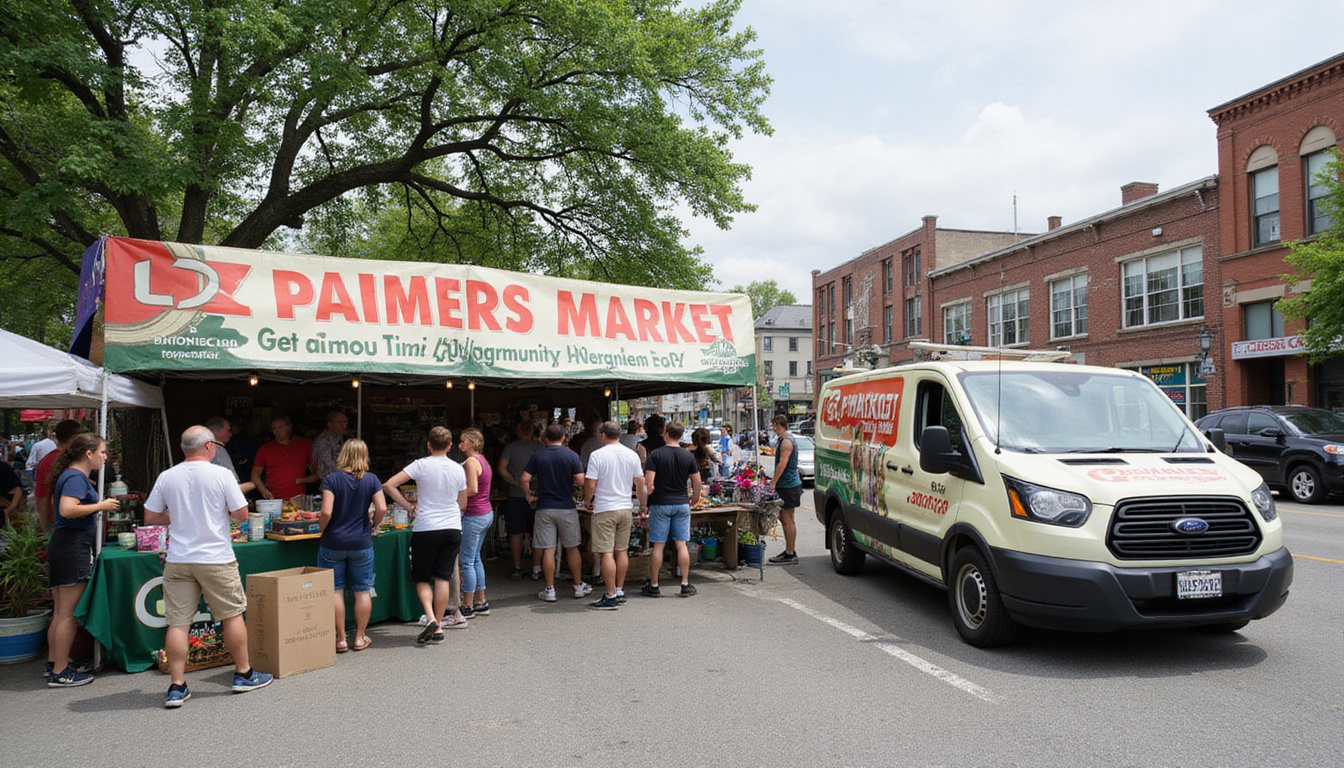
How to measure and improve your offline advertising
To ensure your offline advertising actually skyrockets visibility—rather than just burning budget—you need a simple measurement system.
Track:
- Coupon redemptions and code usage by channel.
- Call volume or text inquiries linked to specific phone numbers in ads.
- Foot traffic changes before, during, and after campaigns.
- Revenue uplifts during specific advertising periods.
- Brand recall via quick customer surveys (“Where did you first hear about us?”).
Then:
- Double down on formats and placements that consistently perform.
- Test different headlines, offers, and designs over time.
- Adjust your geographic target based on where your best customers come from.
Offline advertising optimization doesn’t need to be complex—you just need to be consistent.
FAQ: Offline advertising for local businesses
1. What are the most effective offline advertising methods for small local businesses?
Some of the most effective offline advertising methods include targeted direct mail, well-placed local newspaper or magazine ads, eye-catching storefront and sidewalk signage, participation in community events, and sponsorship of local teams or charities. The best mix depends on your audience and location, but combining a few of these usually delivers the strongest results.
2. How can I measure ROI from my offline marketing and advertising?
To track return on investment, assign unique codes, phone numbers, QR codes, or URLs to each offline advertising campaign. Monitor coupon redemptions, calls, store visits, and revenue during campaign periods. Also ask new customers how they heard about you. Over several months, you’ll see patterns that reveal which offline channels are most profitable.
3. Is offline promotion still important if I already invest heavily in digital ads?
Yes. Offline promotion reinforces your digital efforts, especially for local visibility. Seeing your brand on signs, flyers, or event banners builds familiarity, so people are more likely to click your online ads, follow you on social media, or choose you in search results. A blended offline-and-online approach typically outperforms relying on digital alone for local businesses.
Offline advertising remains a powerful lever for local businesses that know how to use it strategically. By combining targeted print, smart outdoor placements, strong in-store signage, community involvement, and creative grassroots tactics—then connecting everything back to your digital presence—you can dramatically increase local awareness, foot traffic, and sales.
If you’re ready to turn these ideas into a focused, high-impact plan tailored to your neighborhood and customers, start mapping out your next 90 days of offline advertising now. Choose two or three tactics from this guide, assign simple tracking to each, and commit to testing and improving. The sooner you show up consistently in your community’s daily life, the faster your local visibility—and your business—will grow.