
Indoor advertising is one of the most powerful — yet underused — tools for turning casual browsers into loyal, repeat buyers. Unlike outdoor billboards or digital ads that fight for attention in noisy environments, indoor advertising reaches people when they’re already in a buying mindset: inside your store, your mall, your restaurant, your gym, or your venue.
When done strategically, indoor campaigns don’t just drive impulse purchases. They guide shoppers, shape their experience, reinforce your brand values, and gently move people from “I’m just looking” to “I trust this brand and I’ll come back again.”
Below is a practical, strategy-focused guide to indoor advertising that converts, retains, and delights.
Why Indoor Advertising Is So Effective
Before diving into tactics, it’s useful to understand why indoor advertising works so well:
- High intent environment – People inside stores or venues are closer to the point of purchase than someone scrolling social media or driving by a billboard.
- Longer dwell time – Shoppers often spend 20–60 minutes inside retail environments, giving your indoor ads multiple touchpoints to influence them.
- Context-rich messaging – You’re not advertising in a vacuum; your product, staff, and in-store experience all reinforce the message.
According to in-store marketing research, a significant percentage of purchase decisions are influenced or made at the shelf, not before entering the store (source: Shop! Association). Indoor advertising is your chance to win those decisions in the moment.
Map the Customer Journey Before Choosing Indoor Media
Effective indoor advertising starts with understanding your specific journey from entrance to checkout and beyond.
Ask:
- Where are people entering from? Parking lot entrance, mall corridor, street door?
- How do they move? Do they turn right or left? Where do they slow down? Where do bottlenecks form?
- When are decisions made? At the entrance (big-ticket commitment), in the aisles (product choice), at checkout (add-ons, loyalty programs)?
- What touchpoints exist post-purchase? Receipts, packaging, email signup, pickup areas, service counters.
Walk the route your ideal customer takes and note the logical “moments” for indoor ads:
- Welcoming and orienting
- Educating
- Comparing options
- Up-selling / cross-selling
- Capturing loyalty or contact details
- Inviting a return visit
Design your indoor advertising to support these specific moments, not just to “fill wall space.”
Core Indoor Advertising Channels (and How to Use Them)
1. Digital Screens and In-Store TV
Digital indoor advertising screens are among the most flexible tools you can deploy.
Best uses:
- Dynamic product promotions and time-sensitive offers
- Rotating brand stories, testimonials, and social proof
- Educational content: “How it works” demos, care instructions, recipes, or styling tips
- Queue entertainment in waiting lines and checkouts
Conversion tip:
Pair promotional messages with clear, simple guidance:
- “Find this at Aisle 7”
- “Ask our staff about today’s free sample”
- “Scan this QR code for 15% off today only”
This shortens the path from interest to action, especially when the screen is near the relevant product or decision point.
2. Point-of-Purchase (POP) and Shelf Signage
POP materials are classic indoor advertising tools — and they still work brilliantly. These include:
- Shelf talkers and wobblers
- Product comparison charts
- Price callouts and “You save…” tags
- Counter mats and small displays
Why they convert:
When customers are already standing in front of products, tiny bits of helpful information can decisively influence their choice. Highlight:
- Key benefits (“Lasts 2x longer than standard”)
- Use cases (“Perfect for back-to-school lunches”)
- Social proof (“#1 seller in our store”)
Conversion tip:
Avoid clutter. A shelf sign with one strong benefit and a visual icon often outperforms a wordy, complex message.
3. Floor Graphics and Wayfinding
Floor graphics are underappreciated heroes of indoor advertising. They guide traffic and nudge behavior in subtle, effective ways.
Use them to:
- Lead people to new or seasonal collections
- Guide customers to complementary items (“Complete the look in Aisle 10”)
- Support campaigns (“Follow these footprints to our sustainability corner”)
- Reinforce brand personality with playful designs
Conversion tip:
Combine floor graphics with overhead signage and endcaps. Consistent visuals across all three create a seamless path that feels natural rather than salesy.
4. In-Store Audio and Announcements
Indoor advertising isn’t only visual. Your audio environment can have a major impact on buying behavior.
- Background music sets the pace and mood (slower for browsing, upbeat for quick purchases).
- Short recorded messages or live announcements can promote flash deals, events, or loyalty offers.
Conversion tip:
Keep promotional announcements:
- Short (10–15 seconds)
- Specific (“Today only, all skincare kits 20% off in Aisle 5”)
- Infrequent enough not to annoy
Align audio messages with what’s visible nearby to boost impact.
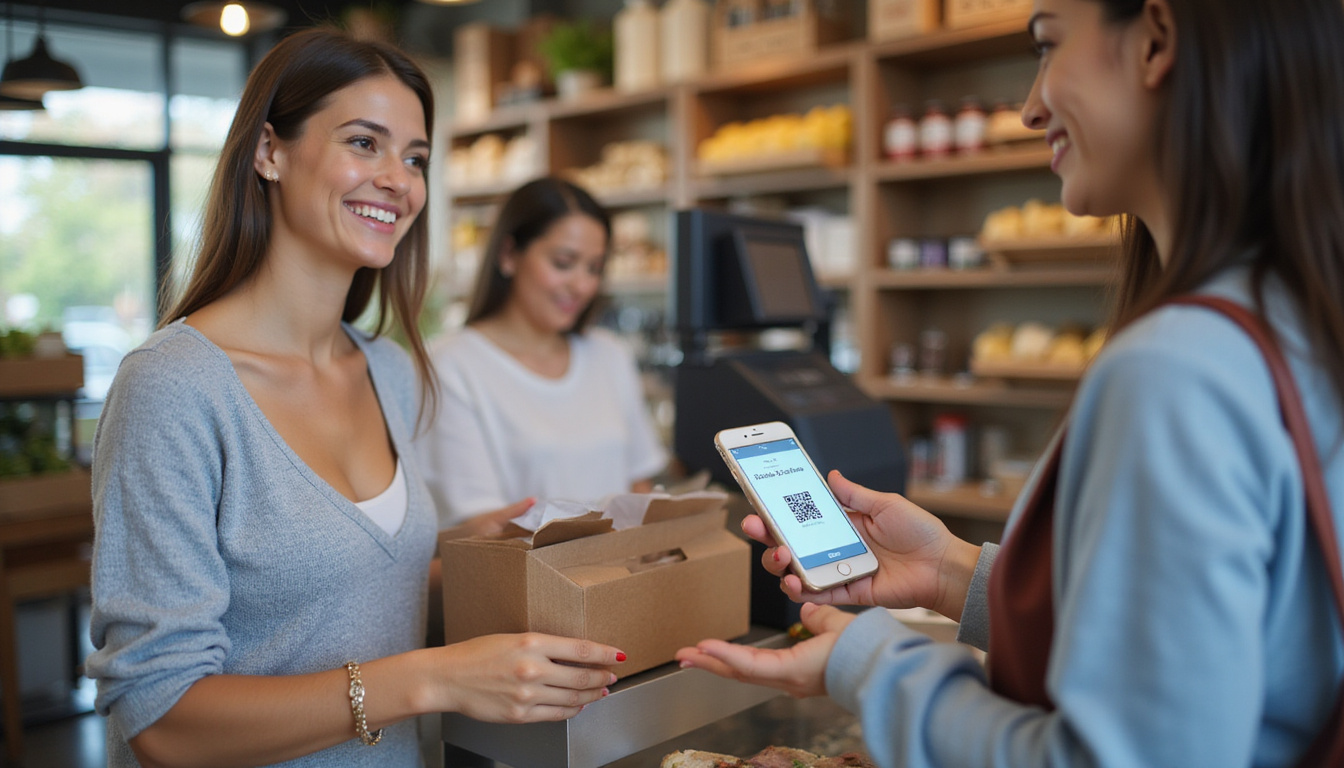
5. QR Codes and Mobile Integration
Modern indoor advertising should bridge the gap between physical and digital.
QR codes can:
- Deliver deeper product info or reviews at the shelf
- Let shoppers virtually “save” items for later online purchase
- Trigger app downloads or special in-store-only discounts
- Collect email or SMS opt-ins with a clear value proposition
Conversion tip:
Always answer “What’s in it for me?” at the QR code.
For example:
- “Scan for quick 1-minute recipes using this product”
- “Scan and get 10% off your next visit — in 30 seconds or less”
Reduce friction and over-communicate the benefit.
Turn Indoor Advertising into a Brand Experience
Winning one sale is not enough. To convert shoppers into loyal customers, your indoor advertising must support a consistent, memorable brand experience.
Make Sure Every Touchpoint Feels “On Brand”
Review your indoor assets:
- Colors and fonts
- Tone of voice in signage and messages
- Visual style of images and icons
- Use of your logo and tagline
Ask if a new customer could recognize your brand from a photo of any one indoor ad, even without your logo. That level of consistency imprints your identity and builds recognition.
Tell a Coherent Story Across the Space
Think beyond individual signs. Instead, design your indoor advertising as chapters of a story:
- Entrance: Who you are and what you stand for
- Key displays: What you recommend and why
- Aisles: How to choose and how to use
- Checkout: How to save, join, or return
- Exit: A clear reason to come back
This narrative approach keeps messaging customer-centered and memorable.
Use Indoor Advertising to Deepen Loyalty, Not Just Drive Sales
To transform shoppers into loyal customers, dedicate a portion of your indoor ad space not to immediate discounts, but to long-term relationship building.
Highlight Your Loyalty Program Visibly
Place loyalty-focused messages:
- At checkouts: “Members saved an average of $X last month.”
- Near high-intent product areas: “Members earn double points on these items today.”
- At pick-up or customer service counters: “Join in under 60 seconds — just your email needed.”
Conversion tip:
Show real, concrete benefits (“Get $5 credit for every $50 spent”) and add social proof (“Over 12,000 members already earning rewards”).
Celebrate Values and Community
Not every sign needs a direct call to buy. Some of the best indoor advertising reinforces “why” people should like and trust you:
- Sustainability practices
- Local sourcing or local partnerships
- Charitable initiatives and community involvement
- Employee stories or “meet the team” features
This kind of branding doesn’t always produce instant sales, but it creates emotional affinity that drives repeat visits and word-of-mouth.
Test, Measure, and Optimize Your Indoor Campaigns
Indoor advertising is often treated as “set it and forget it.” That’s a missed opportunity. You can — and should — optimize it like any other marketing channel.
What to Measure
Depending on your tools and store layout, track:
- Sales lift of featured products vs. baseline
- Redemption rates for QR codes or promo codes displayed indoors
- Signups for loyalty programs or email lists from in-store prompts
- Dwell time in key zones (if you use traffic analytics tools)
- Customer feedback about ease of finding products and clarity of offers
How to Run Simple A/B Tests
Change one variable at a time:
- Headline vs. visual imagery
- Offer type (percentage discount vs. bonus points vs. bundle deal)
- Location of signage (eye-level vs. shelf-level vs. overhead)
- Static poster vs. digital motion graphic
Run each variation for a defined period and compare data. Over time, you’ll learn what types of indoor advertising your specific audience responds to best.
Common Indoor Advertising Mistakes to Avoid
When designing indoor campaigns, be sure to avoid:
- Visual clutter – Too many signs and messages lead to customers ignoring everything.
- Tiny fonts and low contrast – If a shopper must stop and squint, the message is lost.
- Mixed messages – Promotions that contradict each other or confuse pricing erode trust.
- Ignoring staff – Employees are a live extension of your indoor advertising; if they don’t know the current offers, the effect is weakened.
- Never updating content – Outdated posters or digital slides reduce credibility and waste valuable attention.
A simple quarterly audit of all indoor assets can keep your environment fresh and effective.
Practical Checklist for High-Converting Indoor Advertising
Use this as a quick reference when planning or refreshing your in-store campaigns:
- Customer journey mapped from entrance to exit
- Key decision points identified (where ads can genuinely help)
- Message hierarchy defined (what’s most important to say in each zone)
- Consistent brand style across all indoor media
- Clear calls-to-action on promotional pieces
- One main idea per sign or screen to avoid overload
- At least one loyalty-focused touchpoint near checkout
- Mobile integration via QR codes or app prompts where relevant
- Measurement plan for sales lift, redemptions, or signups
- Review schedule to refresh content and retire outdated materials
FAQ About indoor advertising and Shopper Conversion
Q1: What types of indoor advertising work best in small stores?
In small spaces, focus on shelf signage, endcap displays, and counter-top materials. Simple window posters, a small digital screen near checkout, and clear category signage can have a big impact without crowding the space. Prioritize clarity and navigation over sheer volume of ads.
Q2: How can indoor advertising increase sales without heavy discounts?
Use indoor advertising to educate and reassure instead of just lowering prices. Highlight product benefits, comparisons, guarantees, and real customer testimonials. Emphasize value (“lasts longer,” “multi-use,” “top-rated”) and offer small rewards through loyalty points rather than constant markdowns.
Q3: What’s the difference between indoor displays and indoor digital advertising?
Indoor displays include static elements like posters, banners, and physical stands. Indoor digital advertising uses screens and dynamic content that can change throughout the day. Both are useful: static displays are great for evergreen messages (brand, navigation), while digital is ideal for time-sensitive offers, storytelling, and A/B testing.
Turn Your Space into a Silent Salesperson
Your physical environment is already talking to your customers, whether you plan it or not. Thoughtful indoor advertising gives that environment a clear, persuasive voice — one that guides, reassures, and invites people back again.
Start by walking your space like a first-time visitor. Identify where confusion, hesitation, or missed opportunities occur. Then introduce or refine indoor advertising at those points with focused, brand-consistent messages and simple calls-to-action.
If you’re ready to convert more shoppers into loyal customers, begin with a single pilot area — a key aisle, a digital screen, or your checkout zone — and optimize from there. The insights and revenue you unlock from well-planned indoor advertising can transform not just your sales numbers, but the entire customer experience in your store.