
Pop up displays are one of the most efficient ways to turn a basic event booth into a lead-generating, brand-building machine. Whether you’re exhibiting at a trade show, sponsoring a conference, or hosting a pop-up activation, the right display system can determine how many people stop, engage, and remember you long after the event ends.
This guide breaks down how to use pop up displays strategically to boost booth traffic, increase qualified leads, and elevate brand recognition at every event.
Why Pop Up Displays Still Win at Events
In a world of digital ads and virtual events, you might assume physical displays matter less. The opposite is true.
Trade shows and in-person events remain a powerful channel for building relationships, with 81% of trade show attendees having buying authority (source: CEIR). That means the people walking past your booth can often make — or strongly influence — purchasing decisions.
Pop up displays give you three major advantages:
- Stopping power – They help you visually stand out in a crowded hall.
- Brand consistency – They create a cohesive, professional look that reinforces your visual identity.
- Lead capture support – They frame your demos, offers, and conversations so that people not only notice you, but also feel confident enough to engage.
Types of Pop Up Displays and When to Use Each
Not all pop up displays are created equal. Choosing the right type for your goals and space is key.
1. Classic Pop Up Backwall Displays
These are the large, fabric or graphic walls that form the backdrop of your booth.
Best for:
- Defining your booth visually
- Displaying your logo, tagline, and key value proposition
- Photo ops and social media backdrops
Look for lightweight frames with tension fabric or magnetic panels that can be swapped out between events.
2. Modular Pop Up Systems
Modular systems are made of multiple components (walls, counters, shelves, lightboxes) that can be reconfigured depending on the event.
Best for:
- Exhibitors who attend multiple events a year with varying booth sizes
- Brands that want to test different layouts and messaging
- Companies growing into larger exhibit spaces
Modular pop up displays give you flexibility: you can use a subset for a small 10’ x 10’ booth or the full kit for a large island exhibit.
3. Pop Up Banner Stands and Roll-Ups
Portable banner stands are slim, vertical displays that set up in seconds.
Best for:
- Highlighting a specific product or offer
- Directing traffic to your booth or stage
- Filling visual gaps in inline or corner booths
Because they’re so easy to transport, banner displays are a smart add-on when traveling by plane or rideshare.
4. Tabletop Pop Up Displays
These compact displays sit on top of your table and are ideal for smaller events or tight budgets.
Best for:
- Job fairs, local business expos, and campus events
- Satellite or secondary booths
- Brands exhibiting for the first time
They’re a low-risk way to start exhibiting while still presenting a branded, professional presence.
5. Backlit and LED Pop Up Displays
Illuminated displays use built-in LEDs or lightboxes to make your graphics glow and stand out.
Best for:
- Dimly lit exhibit halls or evening events
- Premium brands wanting a high-end look
- Drawing attention from a distance
Backlit pop up displays often attract more foot traffic simply because they’re brighter and more visually striking than surrounding booths.
Designing Pop Up Displays That Command Attention
Good design is the difference between a pop up that blends in and one that magnetizes your ideal prospects. Follow these principles when creating your graphics.
Keep Your Message Laser-Focused
People walking the show floor make snap decisions in seconds. Your display should answer three questions instantly:
- Who are you?
- What do you offer?
- Why should they care?
Use a single, clear headline instead of a long paragraph. For example:
- “Cut Payroll Processing Time by 50%”
- “Smart Sensors for Safer Construction Sites”
Place your logo and core benefit statement at eye level.
Use Visual Hierarchy to Guide the Eye
Structure your graphics so the viewer’s eye moves naturally from:
- Main headline
- Sub-head or key benefit
- Supportive imagery or icons
- CTA (e.g., “Scan to Book a Demo”)
Avoid clutter. White space (or negative space) makes your key message more readable, not less impressive.
Choose High-Impact Imagery
- Use real product shots or high-quality lifestyle images that suggest outcomes (e.g., people using your product successfully).
- Avoid generic stock photos that could belong to any brand.
- Ensure all images are high-resolution and optimized for large format printing.
Align Colors and Fonts With Your Brand
Your pop up displays should be instantly recognizable as “you” from across the hall.
- Stick to your brand color palette.
- Use the same primary fonts as your website and marketing materials.
- Ensure strong contrast between text and background for readability.
Strategically Placing Pop Up Displays to Maximize Leads
Placement matters just as much as design. Think of your pop up displays as part of a journey you want attendees to follow.
Create a Visual Funnel Into Your Booth
Arrange displays so they “pull” people inward:
- Place tall backwalls at the rear or sides to frame your space.
- Use banner stands at the aisle edge to call out your main offer.
- Position a branded counter or podium as the first interaction point.
This layout creates flow and prevents your booth from feeling like a flat wall people pass by.
Make Your Offer Visible From the Aisle
Whatever you’re using as your key lead magnet — demo, giveaway, assessment, or consultation — should be clearly promoted on your pop up displays:
- “Free On-Site Security Audit — 5 Minutes”
- “Live Product Demo Every 30 Minutes”
- “Spin to Win: Gift Cards and Swag”
If people can’t tell what they’ll gain by stopping, they won’t.
Use Height and Angles Smartly
- Angle displays slightly toward traffic flow rather than straight on.
- Take advantage of vertical space with taller pop ups where allowed.
- Avoid blocking sightlines — staff and counters should not hide key messages.
Turning Pop Up Displays Into Lead-Generation Machines
The most effective pop up displays don’t just look good — they support a measurable leadgen strategy.
Integrate Clear Calls-to-Action
Every major panel or banner should invite a specific action. Examples:
- “Scan to Get the Full Case Study Library”
- “Book a Strategy Session — 15 Spots Only”
- “Enter to Win: Drop Your Card Here”
Use short, action-driven language and make the CTA text bold or highlighted.
Connect Offline Experiences to Online Journeys
Bring people from your pop up displays into your digital ecosystem:
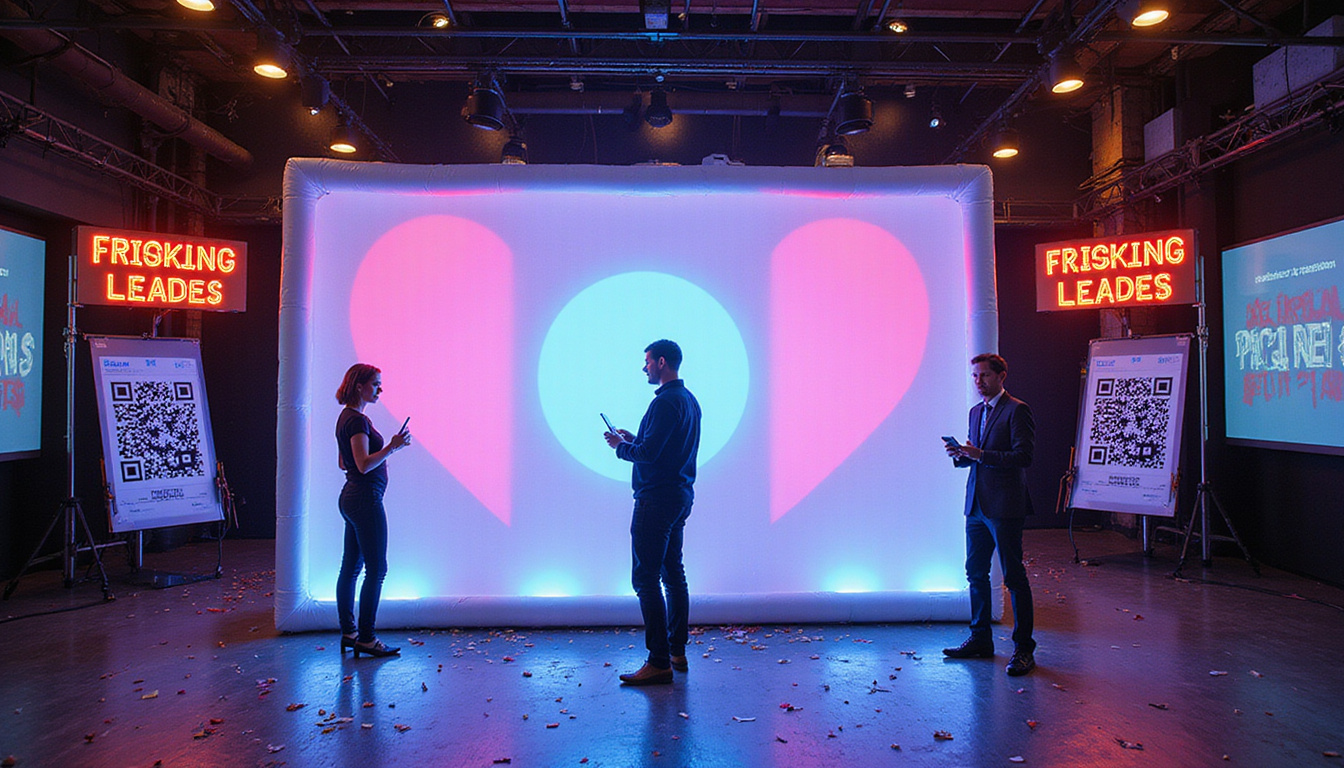
- Add QR codes that link to landing pages, demo requests, or content downloads.
- Include short vanity URLs that are easy to remember.
- Use unique tracking links for each event so you can measure performance.
This lets you follow up after the show and attribute pipeline back to specific displays and messages.
Highlight Social Proof and Results
If space allows, dedicate a portion of your graphics to evidence:
- Client logos
- Short testimonials
- Key statistics (e.g., “Trusted by 2,000+ Clinics”)
Social proof reduces perceived risk and encourages more serious conversations at your booth.
Measuring the Impact of Your Pop Up Displays
To know whether your event strategy is working, track more than just “how busy it felt.”
Key Metrics to Monitor
- Leads captured (scanned badges, forms, QR signups)
- Qualified leads (based on pre-defined criteria)
- Meetings booked during or after the show
- Pipeline and revenue attributed to event leads
- Traffic patterns (which layouts and messages attracted more visitors)
Compare performance across events and layouts to refine your pop up display strategy over time.
Best Practices for Long-Term Use and ROI
Pop up displays are an investment; smart handling extends their life and value.
Protect Your Displays in Transit
- Use padded, hard-shell cases for frames and graphics.
- Clearly label cases for easy organization and faster setup.
- Train staff on correct folding, rolling, or mounting methods.
Refresh Graphics Strategically
You don’t need to redesign everything for every show. Instead:
- Keep core brand and logo elements consistent.
- Swap out panels or fabric skins for new campaigns or product launches.
- Update CTAs and offers to reflect your current focus.
This keeps your presence fresh without starting from zero each time.
Equip Your Team to Use Them Well
Even the best-designed pop up displays can fail if your staff doesn’t leverage them.
- Brief your team on the key messages featured on the graphics.
- Align talking points with the headlines and CTAs printed on displays.
- Position staff where they can greet attendees naturally near focal points.
When design and human interaction are aligned, your booth feels intentional and engaging.
Quick Checklist: Are Your Pop Up Displays Ready to Perform?
Use this list as a pre-show sanity check:
- [ ] Clear headline explaining your main benefit
- [ ] Logo and brand colors consistent with your other channels
- [ ] High-resolution imagery that supports your message
- [ ] Strong, visible CTA(s) with QR codes or URLs
- [ ] Layout that guides people into your booth
- [ ] Social proof or key results included where possible
- [ ] Easy-to-transport cases and labeled components
- [ ] Staff briefed on messages and offers
FAQ About Pop Up Displays for Events
1. What makes good pop up displays for trade shows specifically?
Effective trade show pop up displays are large enough to be seen from a distance, use a single clear value proposition, and integrate CTAs that tie directly to your offer at the show, such as demos, consultations, or contests. They should also be lightweight, easy to assemble, and durable enough for frequent use.
2. How can I design portable pop up displays that still look premium?
Choose high-quality tension fabric or laminated graphics, keep the design clean and minimal, and use consistent branding. Adding elements like backlighting, subtle textures, or high-end photography can make portable pop up displays feel upscale while remaining easy to ship and set up.
3. Are custom pop up displays worth the extra cost for smaller brands?
Custom pop up displays can be a smart investment even for smaller brands if you attend multiple events per year or rely heavily on in-person selling. A custom design tailored to your core messaging and audience often improves traffic, lead quality, and brand recall enough to justify the cost over generic or rented options.
Pop up displays are more than just “something to fill space” in your booth. Done right, they become silent salespeople: attracting the right attendees, framing better conversations, and making your brand unforgettable.
If you’re ready to transform your next event from a cost center into a measurable growth channel, start by upgrading your visual presence. Audit your current pop up displays, clarify your main event offer, and invest in graphics that truly communicate your value.
When you’re ready, partner with an experienced display provider or designer who understands both branding and lead generation — and turn your next booth into a powerful engine for leads and brand recognition.