
If your company runs cars, vans, or trucks, you’re sitting on a massively underused marketing asset: your own vehicles. Professionally designed vehicle wraps turn ordinary fleets into eye-catching mobile billboards that generate impressions wherever they go—without ongoing ad fees.
In this guide, you’ll learn how wraps work, what they cost, why they’re so effective, and how to get them right so they actually grow your business, not just make your vehicles look pretty.
What Are Vehicle Wraps?
Vehicle wraps are large, custom-printed vinyl graphics applied directly to a vehicle’s painted surface. They can cover:
- The entire vehicle (full wrap)
- Key portions like doors, hood, and rear (partial wrap)
- Smaller areas such as windows or panels (spot graphics/decals)
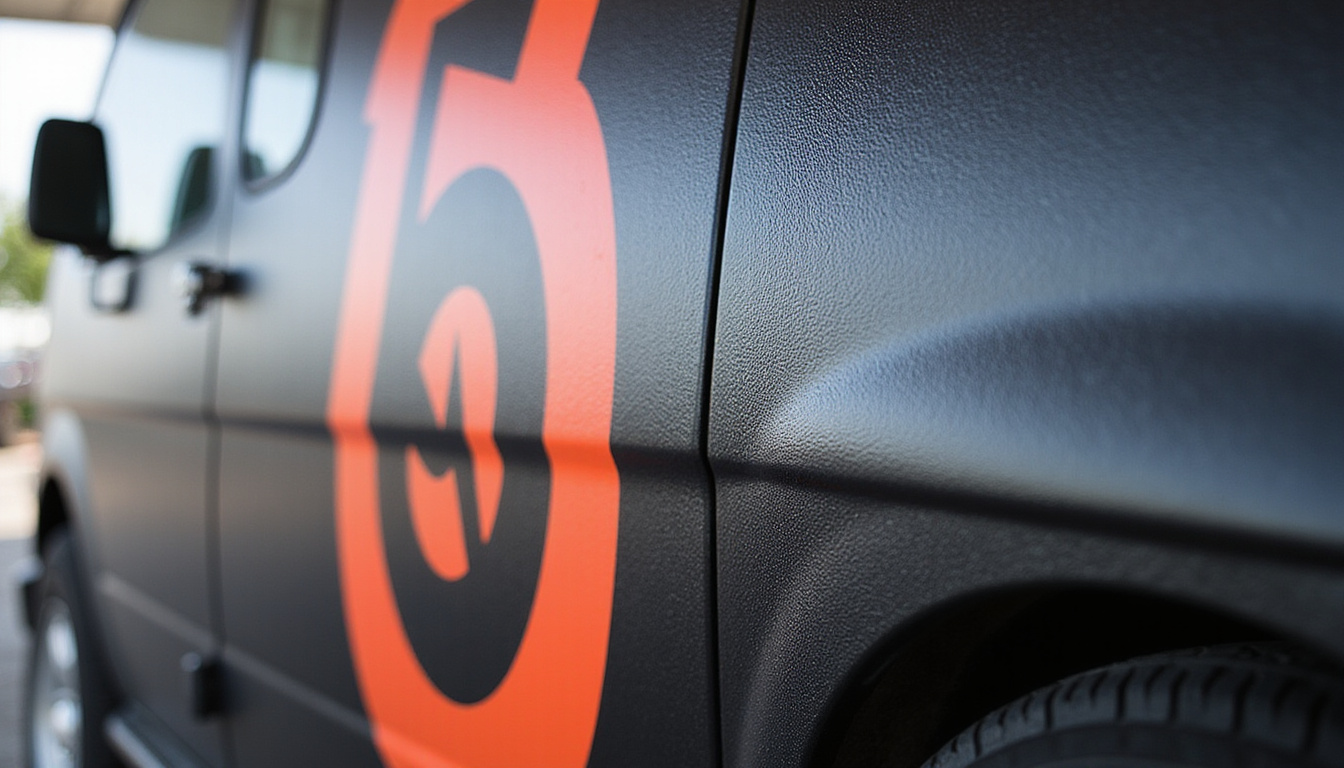
Wraps are printed in full color using durable, UV-resistant inks, then laminated and installed by professionals who shape the vinyl to the contours of each vehicle. When done right, the wrap looks like a custom paint job—but with far more flexibility and branding power.
Why Vehicle Wraps Are Such Powerful Advertising
Unlike digital ads, which compete for limited attention on a small screen, vehicle wraps show up in the real world, at full scale, in front of people who may never have searched for your services online.
Key benefits of fleet vehicle wraps
-
Massive daily impressions
A single wrapped vehicle can generate thousands of impressions per day, depending on traffic and routes. Studies have shown that mobile billboards can reach more consumers at a lower cost per thousand impressions (CPM) than almost any other form of advertising (source: Outdoor Advertising Association of America). -
One-time investment, long-term exposure
You pay once for design, printing, and installation. After that, your wrap continues working for you 24/7—no monthly ad fees, no bidding wars, no algorithm changes. -
Hyper-local targeting
Your vehicles travel where you do business: neighborhoods, job sites, local roads. That means your brand appears in the exact communities you want to serve. -
Professional image and trust
Branded vehicles instantly communicate legitimacy. A clean, consistent fleet wrap helps customers feel safe opening the door to a technician or delivery driver. -
Brand consistency across the fleet
Wraps lock in your logo, colors, and core message, ensuring every vehicle represents your brand the same way.
Types of Vehicle Wraps to Consider
Not every business needs a full-coverage wrap. Choosing the right wrap type helps balance impact and budget.
1. Full vehicle wraps
A full wrap covers almost all painted surfaces, sometimes including the roof and bumpers.
Best for:
- High-visibility brands (contractors, home services, franchises)
- New vehicles you want to protect and fully brand
- Companies that see vehicles as core marketing assets
Pros: Maximum impact, complete design freedom, paint protection.
Cons: Highest upfront cost, more complex install.
2. Partial wraps
Partial wraps may cover the sides, rear, and partial hood, integrating with the vehicle’s base color.
Best for:
- Small businesses seeking strong visibility on a budget
- Fleets with neutral or brand-friendly vehicle colors
- Companies testing wraps for the first time
Pros: Lower cost, still very noticeable when designed well.
Cons: Less design space; must integrate cleanly with paint.
3. Spot graphics & lettering
These include cut vinyl logos, contact info, and simple graphics instead of full printed imagery.
Best for:
- Solo operators (e.g., independent tradespeople)
- Businesses that lease or change vehicles frequently
- Simple branding like logo + phone + website
Pros: Very affordable, quick to install, easy to update.
Cons: Lower visual impact compared to large-scale vehicle wraps.
What Do Vehicle Wraps Cost?
Pricing depends on vehicle size, wrap coverage, design complexity, and local market rates, but typical ranges are:
- Spot graphics / basic lettering: $200 – $800 per vehicle
- Partial vehicle wraps: $800 – $2,500 per vehicle
- Full vehicle wraps: $2,000 – $5,000+ per vehicle
For fleets, wrap providers often offer volume discounts.
How long do wraps last?
Quality vinyl wraps, properly installed and cared for, usually last:
- 3–5 years for standard commercial use
- Longer in mild climates; shorter if exposed to extreme sun or harsh conditions
This means your cost per month—and even more importantly, cost per impression—tends to be very low compared to ongoing media buys.
Design Principles That Make Vehicle Wraps Convert
A wrap isn’t just decoration; it’s a moving ad that people have only seconds to absorb. The design must be clear and intentional.
Focus on the essentials
From a moving car, people can’t read paragraphs. Your design should communicate three core elements:
- Who you are – Your logo and brand name
- What you do – A short, clear service description
- How to reach you – Phone, website, and/or short URL
A simple formula:
LOGO + “What you do in 3–5 words” + Contact method
Examples:
- “Smith Plumbing – 24/7 Emergency Service – 555-123-4567”
- “BrightClean – Residential & Office Cleaning – BrightClean.com”
Use hierarchy and contrast
Your wrap should have a clear reading order:
- Brand name / logo
- Service description
- Contact info
Use size, color contrast, and placement to guide the eye. Avoid busy backgrounds that compete with your main message.
Leverage your brand colors—wisely
Bold colors stand out on the road, but legibility matters more than flair. Dark text on a light background (or vice versa) is usually easiest to read from a distance.
Don’t overcrowd the design
Common mistakes with vehicle wraps:
- Too many photos or icons
- Long lists of services
- Tiny fonts and dense text
Less is more. If someone only remembers your company name and what you do, that’s already a win.
The Vehicle Wrap Process: Step-by-Step
Knowing what to expect helps you plan fleet downtime and budgeting.
1. Strategy and goals
Clarify:
- Target audience
- Primary message (brand awareness, key service, promotion)
- Geographic areas where vehicles typically travel
This informs both design and messaging.
2. Design and proofing
A wrap designer will:
- Measure your exact vehicle models
- Build artwork templates to fit contours and panel breaks
- Create mockups showing all sides of the vehicle
Review carefully to ensure:
- Spelling is perfect
- Logo usage follows your brand guidelines
- No critical text falls across seams, handles, or fuel doors
3. Printing and lamination
The approved design is printed on high-quality cast vinyl using wide-format printers, then laminated to protect against UV, scratches, and weather.
4. Vehicle preparation
Before installation, vehicles must be:
- Thoroughly cleaned and decontaminated
- Free from wax, oil, and residues
- Inspected for body damage, rust, or peeling paint
Poor surface conditions can cause premature wrap failure.
5. Installation
Skilled installers apply the wrap, stretching and heating vinyl to conform to curves, recesses, and edges. Depending on size and complexity, installation typically takes:
- 1 day for small vehicles
- 1–2 days for larger vans and trucks
Plan for vehicles to be out of service during this time.
Protecting Your Investment: Care and Maintenance
Good maintenance helps your vehicle wraps look sharp and last longer.
Basic care guidelines
- Hand wash only whenever possible; avoid harsh bristle car washes
- Use mild, non-abrasive detergents
- Rinse off bird droppings, tree sap, and road grime as soon as you can
- Avoid high-pressure spraying at close range or against edges and seams
- Park in shade or indoors when possible to reduce UV exposure
If a section is damaged (e.g., from a fender bender), you can often replace just that panel instead of the entire wrap.
Maximizing ROI from Fleet Vehicle Wraps
Wrapping your fleet is step one; step two is integrating it into your broader marketing strategy.
Combine wraps with online marketing
- Feature your wrapped vehicles in social media posts and ads
- Use consistent URLs, phone numbers, and branding across wrap, website, and profiles
- Add tracking phone numbers or unique URLs to measure lead sources
Track lead sources
Train your team to ask, “How did you hear about us?” and include “Saw your vehicle” as a selectable option in your CRM or intake forms. This helps you measure the impact of your fleet wraps over time.
Choose routes with visibility in mind
When feasible:
- Schedule routes through high-traffic urban corridors
- Park at job sites where foot and vehicle traffic is high
- Use prominent street parking near your storefront or office
Your vehicles are mini billboards—place them where people will see them.
Industries That Benefit Most from Vehicle Wraps
Almost any business with road presence can benefit, but vehicle wraps are especially effective for:
- Home services: plumbers, HVAC, electricians, roofers, landscapers
- Delivery & logistics: couriers, food delivery, local distribution
- Healthcare & wellness: mobile clinics, home care providers
- Retail & franchises: restaurants, cleaning services, gyms, pest control
- Professional services: real estate agents, IT support, event companies
If clients come from a defined geographic area and your vehicles are already on the road, wraps are often one of the highest-ROI branding tools you can deploy.
Common Myths About Vehicle Wraps
“Wraps damage the paint.”
High-quality wraps installed on sound factory paint usually protect the finish from UV rays and minor abrasions. Problems arise mainly from poor prep, bad paint, or low-grade materials.
“They’re only for big companies.”
Even a single wrapped van or pickup can noticeably boost awareness for a solo operator. Starting with a partial wrap or spot graphics is budget-friendly and scalable.
“People don’t notice them.”
Modern wrap designs with bold colors and clean layouts stand out dramatically in traffic. When you’re looking for them, you’ll quickly realize how many wrapped vehicles you notice every day.
FAQ About Vehicle Wraps and Fleet Graphics
Q1: How long does a vehicle wrap last on a business vehicle?
Most commercial vehicle wraps last 3–5 years with proper care, though this can vary based on climate, sun exposure, and how often the vehicle is washed and parked outdoors.
Q2: Are car wraps and truck wraps removable without harming the paint?
Yes. Professionally installed car and truck wraps made from quality vinyl are designed to be removable. When removed within their intended lifespan and on original, undamaged paint, they typically leave the paint in good condition.
Q3: What’s better for branding—custom paint or commercial vehicle graphics?
For most businesses, commercial vehicle graphics (wraps and decals) are better because they’re more flexible, easier to update, often cost less than custom paint, and provide an added layer of protection for the original finish.
Turn Your Fleet into a 24/7 Sales Engine
Every mile your unbranded vehicles drive is a missed opportunity to make an impression, spark curiosity, and win new customers. Professionally designed vehicle wraps transform your fleet into a rolling ad campaign that never sleeps, delivering consistent visibility at a fraction of the long-term cost of traditional media.
If you’re serious about growing local brand recognition, leads, and trust, don’t let your vehicles stay anonymous. Talk to a reputable wrap provider, start with one or two key vehicles if needed, and turn your everyday routes into powerful, trackable marketing channels.
Your next customer could be sitting at the light behind you. Make sure your vehicle is telling them exactly who you are and how you can help.