
Signage Secrets Every Business Needs to Boost Foot Traffic
In a world of online ads and social media campaigns, it’s easy to overlook a powerful, old-school marketing tool that works 24/7: signage. The right signage doesn’t just display your name; it can stop people in their tracks, draw them inside, and subtly guide them toward buying. Whether you run a café, boutique, salon, or professional office, understanding how to use signage strategically can significantly increase foot traffic and in-person sales.
Why Signage Still Matters in a Digital-First World
Even as more purchasing journeys begin online, most transactions still end in the physical world. A well-placed, well-designed sign can be the difference between someone walking past or walking in.
Studies have shown that:
- Almost 8 in 10 consumers say they have entered a store they had never visited before based simply on its signs (source).
- Many customers also associate the quality of signage with the quality of the business itself.
In short, your signage is often your first impression. If that impression is unclear, outdated, or invisible, you’re leaving money on the table.
The Core Functions of Effective Signage
Before diving into design tricks, it helps to understand what great signage actually does. Strong, strategic signage typically serves four key roles:
- Identify – Tells people who you are and what you do.
- Attract – Grabs attention from pedestrians and drivers.
- Inform – Communicates offers, hours, directions, and expectations.
- Guide – Helps people navigate your space comfortably and confidently.
The best signage systems do all four. A huge, pretty logo alone isn’t enough; every sign—from your main storefront sign to the small ones on your shelves—should be working toward these goals.
Types of Signage Every Business Should Consider
Not every business needs every type of signage, but most local businesses benefit from a mix. Think of your signs as a team: each one has a role to play.
1. Exterior Signage: Your 24/7 Billboard
Exterior signage is your primary foot-traffic magnet. Typical options include:
- Fascia or storefront signs – Mounted above your door with your business name and core offer.
- Window graphics – Vinyl decals showing hours, services, or promotions.
- Monument or pylon signs – Freestanding signs near the road or parking lot.
- Awning signs – Fabric or metal awnings that provide shade and visibility.
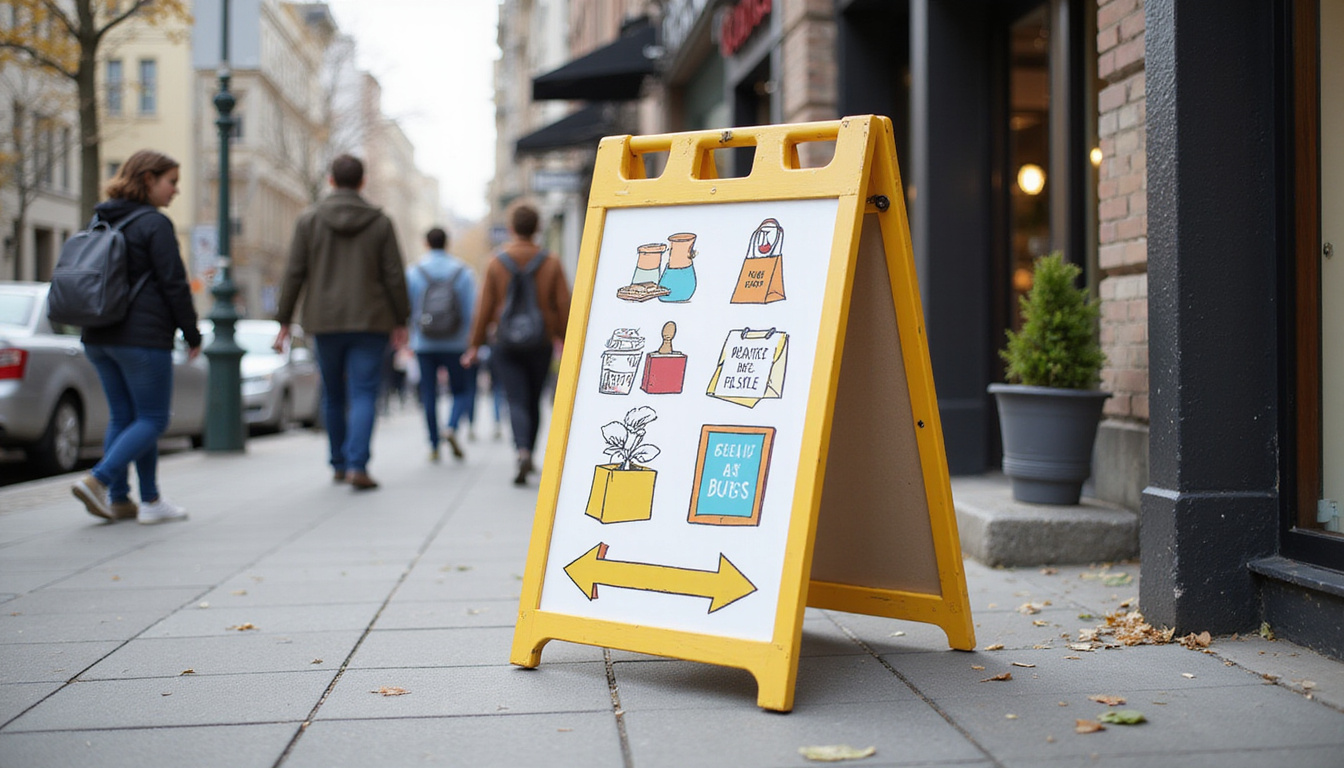
- Sidewalk or A-frame signs – Portable signs you can change daily.
If you only invest in one category of signage, this should be it. People have to see you to visit you.
2. Interior Signage: Turning Visitors into Buyers
Once people step inside, interior signage helps guide and influence their behavior:
- Directional signs – “Order Here,” “Pick Up,” “Restrooms,” and section markers.
- POS (point-of-sale) signs – Messages near the counter to prompt impulse add-ons.
- Informational signs – Menus, service lists, pricing boards, and policy signs.
- Promotional signs – Highlighting new arrivals, bundles, or limited-time deals.
- Brand storytelling signs – Brief pieces about your story, sourcing, or mission.
Good interior signage reduces confusion, speeds up decisions, and nudges customers to explore more areas and options.
3. Temporary and Seasonal Signage: Create Urgency
Short-term signage is perfect for:
- Sales and clearances
- Holiday or event promotions
- New product launches or services
- Pop-up events or collaborations
Use different colors or formats than your everyday signage so temporary messages stand out without cluttering your core brand image.
Design Principles That Make Signage Impossible to Ignore
You don’t need to be a designer to create effective signage, but you do need to follow some basic rules. These principles help ensure your signs are readable, attractive, and persuasive.
1. Prioritize Readability Above All
If people can’t read it quickly, it won’t work. Key factors include:
- Font choice: Use clean, sans-serif or simple serif fonts. Avoid overly decorative scripts for main messages.
- Font size: The rule of thumb: about 1 inch of letter height for every 10 feet of viewing distance.
- Contrast: Dark text on a light background (or vice versa) is easiest to read. High contrast beats trendy color palettes.
- Spacing: Give letters and lines room to breathe. Crowded text hurts legibility.
Ask yourself: “Can someone driving by at 20–30 mph understand this in three seconds?”
2. Use a Clear Visual Hierarchy
Every sign should have one main message—not three.
Structure your content like this:
- Primary line – The main message (e.g., “Fresh Baked Bread Daily”).
- Secondary line – Supporting detail (e.g., “Artisan loaves, pastries, and coffee”).
- Tertiary line – Optional extra (e.g., “Open 7 Days · 7am–6pm”).
Use size, weight (bold vs regular), and color to signal importance. The eye should know where to look first.
3. Limit Text and Keep It Simple
More words = less impact. Aim for:
- 3–7 words for attention-grabbing exterior signage.
- Short, punchy phrases for promo signs (“Buy 2, Get 1 Free”).
- High-level summaries for menus or service lists, with details available in brochures or on your website if needed.
If it looks like a paragraph, most people walking by will ignore it.
4. Stay On Brand with Colors and Style
Your signage should match your brand identity:
- Use your brand colors consistently, with a high-contrast accent for emphasis.
- Choose imagery and icons that feel like “you.”
- Maintain a similar style across exterior and interior signage so the experience feels cohesive.
Brand consistency builds recognition, and recognition builds trust.
Strategic Placement: Where Signage Does the Most Work
Even great design fails if the sign is in the wrong place. Think about your customer’s journey from sidewalk to checkout.
1. Capture Attention at a Distance
Use large exterior signage to:
- Reach both pedestrians and drivers.
- Be visible from multiple angles.
- Stand out from neighboring businesses (through placement, color, or lighting).
If your location is hidden from the main road, consider an additional sign at the nearest intersection or parking entrance (if allowed).
2. Leverage the “Decision Zone” Near Your Door
Your door and entryway are prime real estate for:
- Store hours
- Key differentiators (“Locally Roasted Coffee,” “Family-Owned Since 1998”)
- Today’s special or best offer
- Clear invitations (“Come In & Browse,” “Walk-Ins Welcome”)
Make it obvious why someone should choose you at the exact moment they’re deciding whether to step inside.
3. Guide Flow Inside Your Space
Once people are in:
- Use directional signage to show where to go first (especially in cafés, clinics, and service businesses).
- Place promotional signs where people naturally pause: at displays, fitting rooms, waiting areas, and checkout.
- Use shelf and rack signage to spotlight high-margin or new items.
Think of signage as a silent host guiding each person through the experience.
Using Signage to Highlight Offers and Drive More Sales
Signage is a powerful way to surface promotions without training every staff member to make the same pitch.
Here are effective ways to use it:
- Feature your hero product: Put your best-seller or most profitable item on a dedicated sign near the entrance.
- Bundle smartly: “Complete the Look” or “Buy Together & Save” signs near complementary items.
- Upsell at checkout: Small signs near the register for add-ons, warranties, memberships, or gift cards.
- Social proof: “Customer Favorite,” “Best Value,” or “Top-Rated” badges can nudge indecisive shoppers.
Use signage to answer the hidden question, “What should I buy here?” as quickly as possible.
Common Signage Mistakes That Repel Customers
Avoid these frequent missteps that quietly hurt foot traffic:
- Cluttered windows – Too many posters, stickers, and handwritten notes make your business look chaotic or outdated.
- Faded, damaged, or dirty signs – Sends a message of neglect and can undermine trust, especially in food or wellness businesses.
- Inconsistent messages – Different fonts, colors, and styles everywhere look unprofessional.
- Outdated information – Old promotions, wrong hours, or a previous logo confuse and frustrate customers.
- Too much DIY – A hand-written chalkboard can be charming; an entire storefront of taped-up paper signs looks cheap.
Do a quick “signage audit” every month: walk by your business like a stranger and notice what stands out—for better or worse.
Measuring the Impact of Your Signage
To treat signage as a real marketing channel, you need to measure it.
Try:
- Before/after comparisons – Note foot traffic and sales before installing new signage and again after 2–4 weeks.
- Unique promo codes or URLs – Put a code on specific signs to track redemptions.
- Customer feedback – Ask new customers, “How did you hear about us?” and track how many mention “your sign.”
- Heat maps or observation – Watch where people linger and what signs they actually look at.
If a sign isn’t performing, test a different message, color, or position instead of assuming signage “doesn’t work.”
A Simple Checklist for Better Signage
Use this quick list when planning or refreshing your business signage:
- Is your main exterior sign visible from a distance and clearly readable?
- Does your signage quickly explain what you do, not just your name?
- Do your windows look inviting, not cluttered?
- Are your hours clearly visible and accurate?
- Is there a compelling reason to come in displayed near the entrance?
- Inside, is it obvious where to go first?
- Do you have clear signs for your top products/services?
- Are all signs clean, undamaged, and on-brand?
- Can a new customer understand your key offerings in under 10 seconds?
If you answer “no” to several of these, improving your signage is likely one of the fastest ways to boost foot traffic.
FAQ: Signage and Foot Traffic
Q1: What type of business signage is most effective for attracting new customers?
Exterior storefront signage combined with a simple, bold sidewalk or A-frame sign is usually the most effective duo. The main sign builds recognition and visibility from a distance, while the sidewalk sign gives a specific, timely reason to stop—like a daily special, discount, or unique service.
Q2: How often should I update my retail signage?
Core brand signage (your main exterior sign and interior branding) should be updated only when you rebrand or move. However, promotional and seasonal signage should change regularly—monthly or even weekly for cafés, restaurants, and retailers—to keep your space feeling fresh and to highlight new reasons to visit.
Q3: What are the best practices for digital signage in stores?
For digital signage, keep messages short, use large text, and avoid fast, flashy transitions that are hard to read. Place screens where people naturally wait—like checkout lines or seating areas—and use them to share a mix of promos, social proof (reviews, testimonials), and helpful info rather than constant hard-selling.
Turn Your Signage into a Silent Salesperson
Your signage is more than decoration; it’s a silent, tireless salesperson working for you around the clock. With thoughtful design, strategic placement, and clear messaging, you can transform casual passersby into curious visitors—and then into loyal customers.
If your current signage isn’t capturing attention or clearly communicating your value, now is the time to act. Audit what you have, decide which new signs could make the biggest difference, and partner with a professional designer or sign company to bring your ideas to life. The sooner you upgrade your signage, the sooner you’ll see more people stopping, stepping inside, and discovering what your business has to offer.